


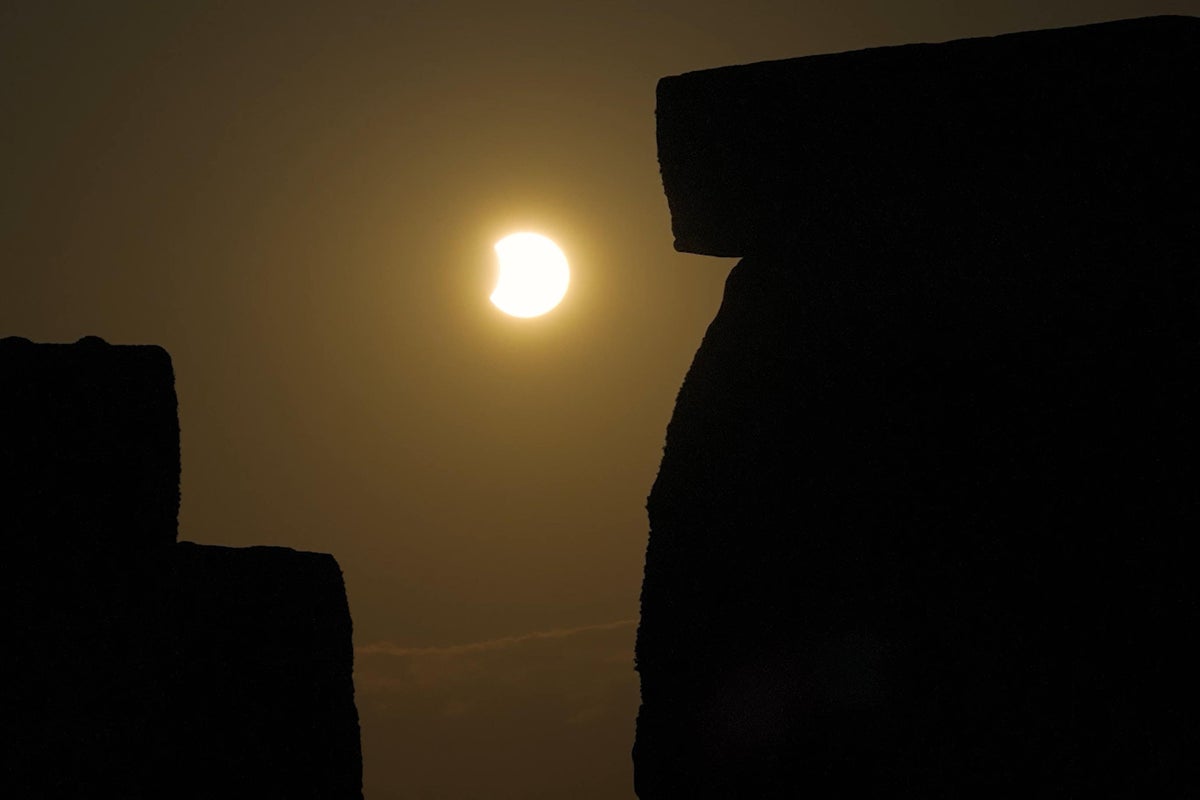
Astronomy fans across the UK were treated to an astral delight overnight as the best solar eclipse in decades was followed by the peak of the annual Perseid meteor shower.
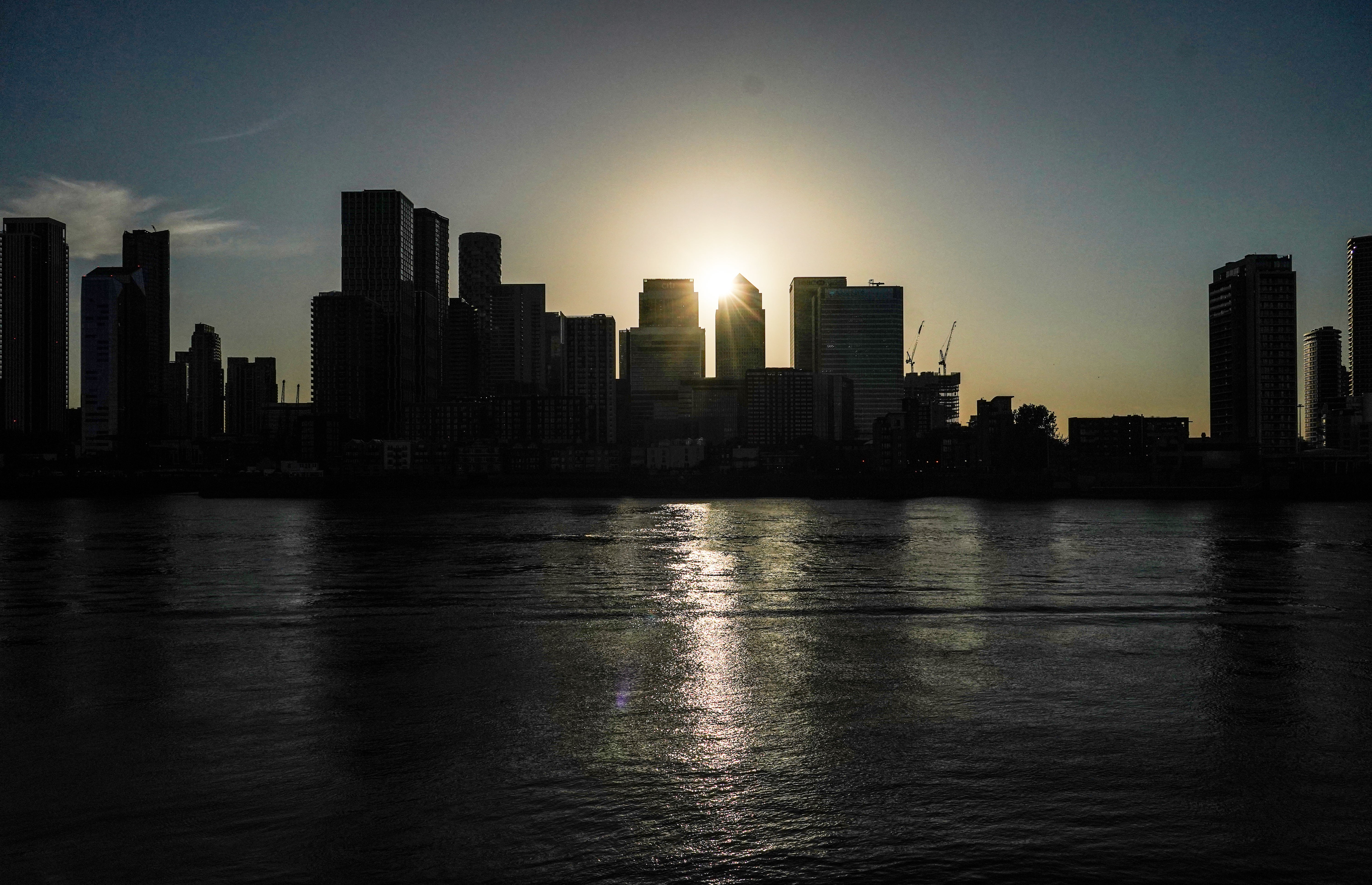
More than 90% of the Sun was obscured by the Moon, the most it has been blocked above UK skies since the total eclipse in 1999.
Crowds of people could be seen at viewing spots in different locations – including the Royal Observatory Greenwich, London, Stonehenge in Wiltshire, Calton Hill, Edinburgh, and outside Queen’s University in Belfast.
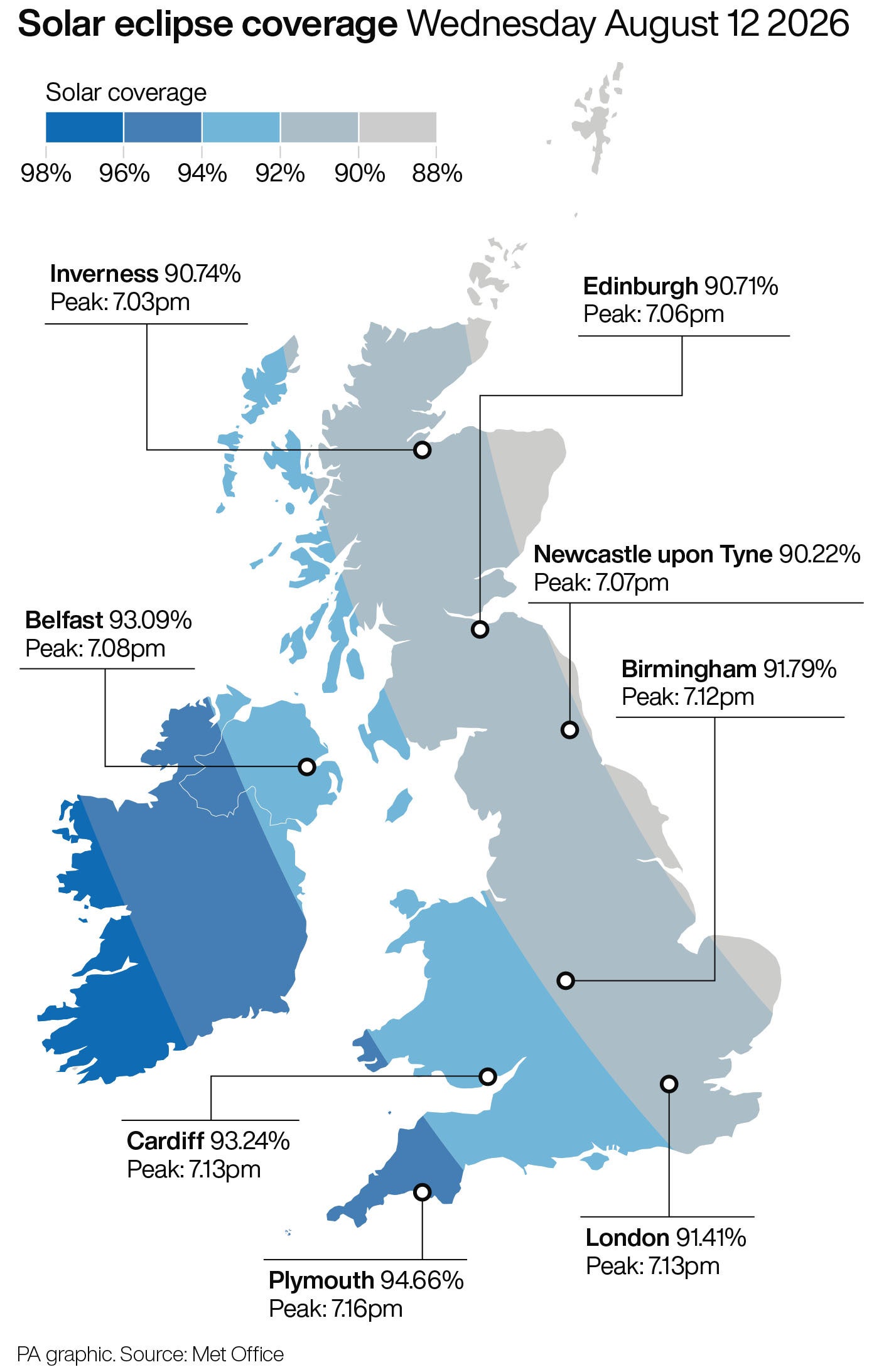 open image in gallery
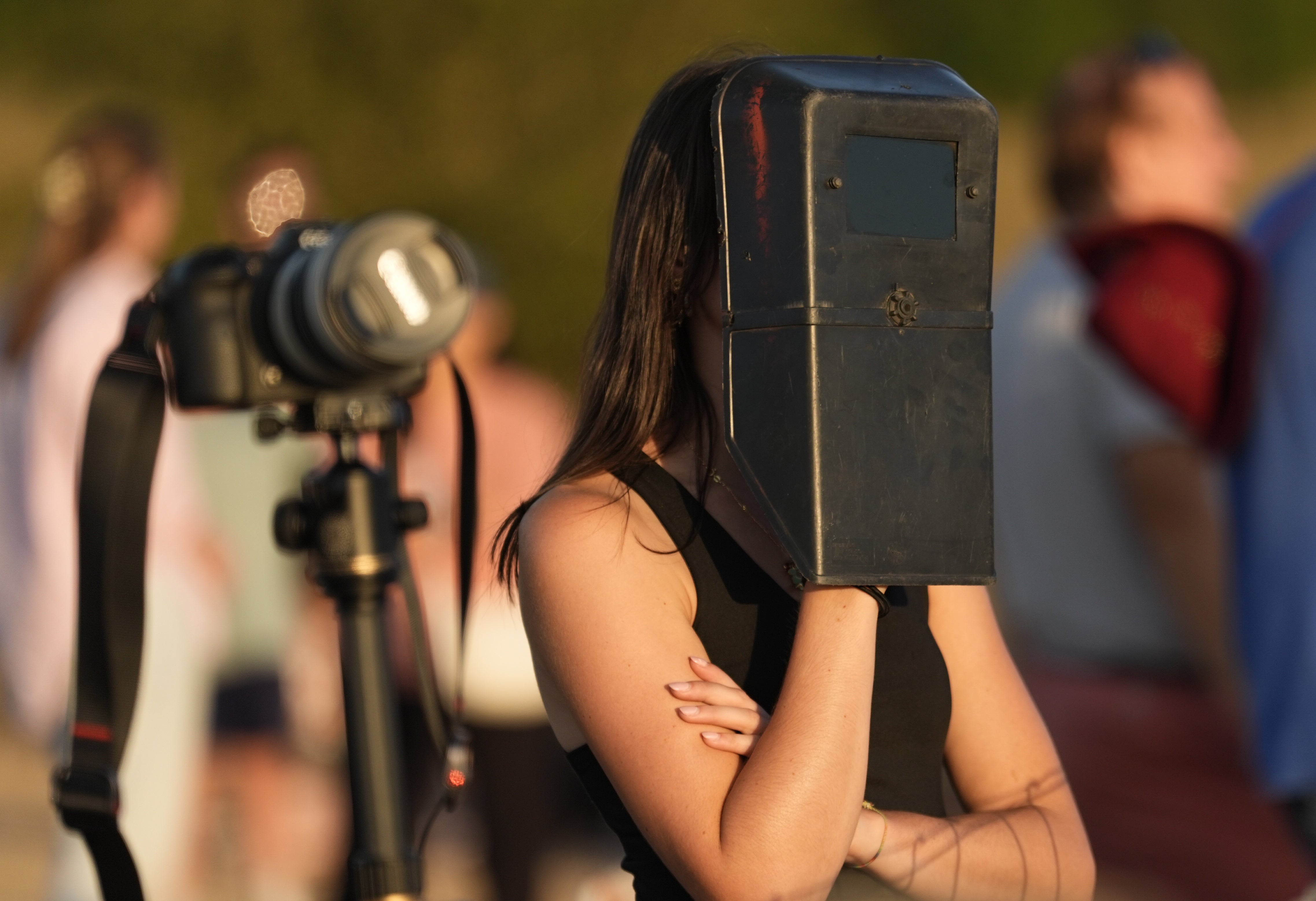
People could be seen with special glasses, and homemade viewers made from cereal boxes and colanders.
Others brought their own chairs, while photographers could be seen with cameras.
Footage shared on social media showed a long queue of people in Goring, West Sussex, appearing to wait for glasses to be handed out to view the eclipse.
Following the eclipse, there was a 650% increase in the number of people searching “sore eyes” on Google in the UK, compared to the same time on Tuesday.
It came after experts warned people to view the spectacle only with ISO 12312-2 solar eclipse glasses for the safest eye protection, as sunglasses would be insufficient.
 open image in gallery
The English Heritage charity said the eclipse peaked over Stonehenge at about 7pm on Wednesday.
Gasps of “wow,” “oh my god” and “this is so cool” were uttered by skywatchers at Greenwich Park, south-east London, as the event took place.
Thousands gathered on Crosby beach in Merseyside, and as the eclipse reached its peak, The Beatles’ Here Comes The Sun was played by a DJ who was stationed on top of a bus at an outdoor bar and street-food venue The Bus Yard.
Hundreds of people were at Cardiff Bay barrage with heavy traffic in the Penarth area as people tried to make it in time for the peak of the event.
Jerry and Jamie Bone, aged 30 and 25 respectively, had planned their wedding at Alpheton in Suffolk for over a year so that they could get married on the day of the eclipse.
The couple provided special glasses and filters so that guests could view the event.
Hours after the eclipse had passed, British stargazers were treated to an extra delight as the Perseid meteor shower lit up the night sky across the UK.
The phenomenon peaked in the early hours of Thursday morning, with those in rural areas having a better chance of getting a clear glimpse of the shower.
The shower is produced as Earth ploughs through a stream of dust left behind by Comet Swift–Tuttle.
Each tiny grain strikes Earth’s atmosphere at about 60 kilometres per second, burning up in a brief flash that takes the appearance of a shooting star.
Convenience stores, national parks and the Royal Greenwich Observatory had all exhausted their glasses supplies ahead of the eclipse, which was the country’s fullest for the next 54 years.
The Royal Greenwich Observatory said it had sold approximately 15,000 pairs of eclipse glasses, a sellout, in the last month.
 open image in gallery
John Lewis said colander sales increased nearly 40% compared to last year, with Nasa recommending the kitchen item as a way to watch an eclipse by viewing the shadows it casts on the ground.
Only special solar eclipse glasses that are ISO 12312-2 certified for the safest eye protection were recommended to be used and sunglasses are not sufficient, experts said.
Following the 1999 total solar eclipse, the Royal College of Ophthalmologists reported around 70 cases of people experiencing vision problems after watching the eclipse.
Around 40% had looked at it for less than a minute.