


Economists back US, fault Nigeria’s fiscal transparency
August 13, 2026 1:04 am

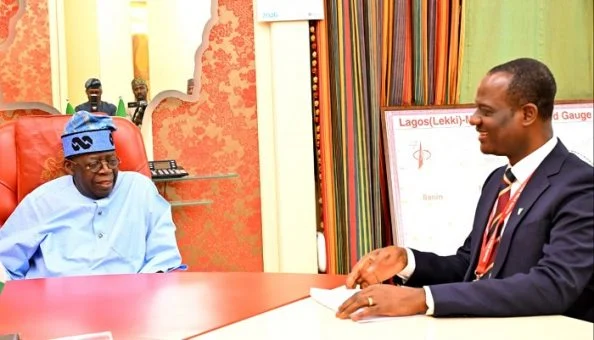
President Tinubu and Finance minister Oyedele
Deborah Musa and Arinze Nwafor
Economists have backed the United States’ assessment that Nigeria failed to meet minimum fiscal transparency requirements, warning that weak budget implementation, poor disclosure of public finances and inadequate audit practices could undermine investor confidence and the country’s economic prospects.
The experts’ reaction followed the 2026 Fiscal Transparency Report of the US Department of State, which placed Nigeria among 67 governments that failed to meet the minimum requirements and said the country made no significant progress in addressing identified deficiencies during the review period.
The country failed to meet the United States’ minimum fiscal transparency requirements and made no significant progress towards addressing the identified deficiencies, according to the 2026 Fiscal Transparency Report of the US Department of State.
The report, which was published August 11 and seen by The PUNCH on Wednesday, assessed governments over the review period of January 1 to December 31, 2025, placed Nigeria among 67 governments that did not meet the minimum fiscal transparency requirements out of 140 governments and entities, including the Palestinian Authority, as assessed by the United States.
Of the 67 governments that failed to meet the requirements, 14 were adjudged to have made significant progress towards addressing their deficiencies, while Nigeria was listed among those that made no significant progress.
The US assessment identified several shortcomings in Nigeria’s public financial management and disclosure practices, including the failure to publish the executive budget proposal within a reasonable period, deficiencies in the completeness of budget information, discrepancies between actual revenues and expenditures and the enacted budget, inadequate independence of the supreme audit institution and the failure to publish accessible information on public procurement contracts.
According to the report, “During the review period, the government made its enacted budget and end-of-year report widely and easily accessible to the public, including online, but did not publish its executive budget proposal within a reasonable period.”
It, however, noted that the government had made information on debt obligations, including major state-owned enterprise debt, publicly available.
However, the report said Nigeria’s budget documents “did not provide a substantially complete picture of the government’s revenues and expenditures, or break down expenditures to support executive offices in the budget.”
The assessment also raised concerns about budget implementation, stating that “Actual revenues and expenditures did not reasonably correspond to those in the enacted budget.”
On public auditing, the US Department of State said Nigeria’s supreme audit institution did not meet international standards of independence and did not publish substantive reports, although it had access to the entire executed budget.
The report further found that Nigeria had a sound legal framework governing its sovereign wealth fund and disclosed its source of funding and general approach to withdrawals.
It also gave Nigeria credit for having laws specifying the criteria and procedures for awarding natural resource extraction contracts and licences, adding that the government followed the existing regulations in practice.
However, it said the country failed to make information on public procurement contracts accessible to the public.
The US assessment is part of an annual review mandated by American law to determine whether governments receiving certain US assistance meet minimum fiscal transparency requirements.
The Department of State said the exercise was designed to promote public access to information on government revenues, expenditures, debt obligations, natural resource contracts and public procurement, while strengthening accountability and public participation in budgeting.
It explained that fiscal transparency was important because it “helps build market confidence, and underpins economic sustainability.”
The department added that transparency provided citizens with information needed to scrutinise government spending and participate meaningfully in public debate.
“Fiscal transparency is a critical element of effective public financial management, helps build market confidence, and underpins economic sustainability,” the report stated.
The United States said its assessment did not amount to a corruption rating, stressing that failure to meet the minimum fiscal transparency requirements did not necessarily mean that a government was significantly corrupt.
It stated, “While a lack of fiscal transparency can be an enabling factor for corruption, the report does not assess corruption.
“A finding that a government ‘does not meet the minimum fiscal transparency requirements’ does not necessarily mean there is significant corruption in the government.”
It equally noted that meeting the requirements did not necessarily indicate a low level of corruption.
For Nigeria, the report emphasised that the supreme audit institution did not meet international standards of independence and did not publish substantive reports, despite having access to the entire executed budget.
Procurement transparency flagged
The report also examined transparency in public procurement and natural resource contracting. While Nigeria was credited with specifying in law the criteria and procedures for awarding natural resource extraction contracts and licences and for following existing regulations in practice, the US assessment found that accessible information on public procurement contracts was not published.
The US criteria state that basic information on public procurement contracts should be publicly available.
For countries with significant natural resource extraction sectors, the criteria require contracting and licensing procedures to be publicly available and codified in law or regulation.
Basic parameters of concessions and contracts should also be made public after decisions are taken, including the geographical area covered, the resource being developed, the duration of the contract and the company awarded the contract or licence.
Economists react
Economists backed the United States’ assessment that Nigeria has failed to meet minimum fiscal transparency requirements. They affirmed that the continued rollover of budgets, weak disclosure of actual spending and poor audit practices undermine confidence in the economy.
The economists, who spoke separately in a phone interview with The PUNCH, said the findings contained in the 2026 Fiscal Transparency Report of the US Department of State reflected longstanding weaknesses in Nigeria’s public financial management.
Director of the Lagos Business School Public Sector Initiative, Prof Franklin Ngwu, said the report reflected problems that Nigerians had repeatedly raised about the country’s budget and financial management.
“This is 2026. I’m not even sure of the budget we are using currently in Nigeria. Are we using 2024? Are we using 2025? Are we using 2026? Nobody is sure,” Ngwu queried.
He said the repeated extensions of budget implementation showed growing confusion in Nigeria’s financial management, noting that portions of the 2025 budget had been rolled over into 2026.
Ngwu said, “So, there seems to be increasing confusion with regards to our financial management, budget management, and the way the whole governance system is a bit disturbing.”
He warned that the weaknesses could affect Nigeria’s international reputation and investment prospects, particularly as foreign investors monitor governance indicators.
Ngwu said, “As long as we are not doing well in this area with this recent development, foreign development, FDI, people that want to invest in Nigeria will be cautious. Non-portfolio investors will be cautious.”
The don called for urgent reforms to strengthen Nigeria’s fiscal management, saying the President should give the matter greater attention.
Ngwu said, “It’s expected that the Mr. President should institute serious reform to address some of these issues. We shouldn’t be in a situation where we are being ranked and being rated in this kind of circumstances.”
Professor of Economics and Public Policy at the University of Uyo, Prof Akpan Ekpo, also described the US report as fair, saying Nigeria’s fiscal challenges went beyond the issues highlighted by the assessment.
Ekpo said, “The report is fair. We don’t even need U.S. support. Even within Nigeria, we know that there’s a problem with the fiscal side.”
He said the country needed greater transparency in borrowing, procurement, revenue and expenditure, while urging the government and civil society to strengthen scrutiny of the budget process.
Ekpo said, “There’s a need for a roundtable to discuss how to improve the budget process, how to avoid political interference.”
He warned that running multiple budgets concurrently could weaken investor confidence, adding that the budget remained an important instrument of macroeconomic management.
Chief Executive Officer of Economic Associates, Dr Ayo Teriba, said the repeated extension of budget implementation timelines demonstrated the weakness in Nigeria’s fiscal reporting.
Teriba said, “We only announce budgets. We never come back to say, yeah, the budget we announced last year. We never release any report.”
He said the government should publish year-to-date budget performance before presenting a new budget proposal, noting that such disclosure would allow citizens and investors to assess how previous appropriations performed.
However, the Chief Executive Officer of the Centre for the Promotion of Private Enterprise, Dr Muda Yusuf, said the Federal Government deserved credit for publishing detailed budget documents, although he agreed that implementation remained a major weakness.
Yusuf said, “The Nigerian government budget is one of the most detailed, and it’s in the public space.”
He added, “There has to be some reforms. I’m not saying that the situation is perfect.”
The economists called for stronger budget implementation, independent auditing, transparent procurement disclosures and regular publication of actual revenue and expenditure reports to close Nigeria’s fiscal transparency gaps.
When contacted for comments on the issue, a Ministry of Finance spokesperson said the ministry would comment on the report at a later date.
US recommendations
The Department of State recommended a number of measures which it said Nigeria could undertake to improve its fiscal transparency.
It called on the Nigerian government to make its executive budget proposal widely and easily accessible to the public, including online.
It also urged Nigeria to provide in its budget a substantially complete picture of government revenues and expenditures and to break down expenditures supporting executive offices.
The United States further recommended that Nigeria ensure actual revenues and expenditures reasonably correspond to those contained in the enacted budget.
On auditing, the report urged Nigeria to ensure that its supreme audit institution meets international standards of independence and publishes audit reports on the government’s executed budget.
The final recommendation was for Nigeria to publish accessible information on public procurement contracts.
The report’s recommendations are significant because the US assessment criteria extend beyond whether a government simply publishes a budget. The review considers whether budget information is publicly available, substantially complete and reliable, while also assessing transparency in natural resource extraction and public procurement.
Under the criteria, an executive budget proposal is expected to be available at least one month before the start of the fiscal year and before legislative approval.
An enacted budget should generally be published within three months of enactment, while an end-of-year report should be available within 12 months of the end of the fiscal year.
The United States also expects information on government debt obligations, including debt linked to major state-owned enterprises, to be available on a public-facing website and updated at least annually.
Where governments provide sovereign loans, the terms and conditions are expected to be publicly disclosed.
The US assessment placed considerable emphasis on whether publicly available budget documents provide a complete picture of government finances.
According to the criteria, budgets should show planned expenditures and revenues, including natural resource revenues, with expenditures broken down by ministry and revenues broken down by source and type.
The documents should also detail allocations to and earnings from state-owned enterprises, while major state-owned enterprises should have publicly available audited financial statements.
The report said budget documents should incorporate all special accounts or funds and that legitimate off-budget accounts should be audited, with the results made public and the accounts subjected to oversight.
The US review also requires budget documents to include significant expenditure supporting executive offices or royal families where such spending represents a significant budgetary outlay.
Although military and intelligence budgets may be withheld from public disclosure for national security reasons, the report said such budgets should remain subject to parliamentary approval or civilian public oversight.
The US Department of State also placed emphasis on the role of supreme audit institutions in ensuring credible government financial reporting.
According to the assessment criteria, such institutions should be independent, have access to the executed budget, audit government spending and verify annual financial statements.
Their findings and recommendations should also be published within a reasonable period, generally within 12 months of the dissemination of the end-of-year report.
73 countries passed
The US report said 73 governments met the minimum fiscal transparency requirements in the 2026 assessment, while 67 did not.
Of the 67 that failed, 14 made significant progress towards meeting the requirements during the review period.
Countries assessed as meeting the requirements included Ghana, Kenya, Rwanda, South Africa, Uganda, India, Indonesia, Morocco, Mauritius, Namibia, Senegal?
The report listed a broad range of countries that met the requirements, including Ghana, Kenya, Rwanda, South Africa and Uganda, as well as India, Indonesia, Morocco and Mauritius.
The assessment also stressed that determinations could change from year to year because US law requires the Department of State to update and strengthen the minimum fiscal transparency requirements, while changes in governments’ public financial management performance or new information could affect the outcome.
The 2026 report introduced a strengthened requirement that governments make the terms and conditions of sovereign loans made to foreign borrowers publicly accessible, including liabilities and collateralised assets.
The review considered information obtained from US embassies and consulates, other US government agencies, international organisations and civil society organisations.
Fiscal transparency
The US government linked fiscal transparency not only to accountability but also to investment and the wider business environment.
It said transparent public financial management could reduce the risk of corruption and unfair practices in international markets, promote internationally recognised standards for extractive industries, reduce financial crimes such as money laundering and terrorist financing, and improve the availability of debt information.
The report said the Fiscal Transparency Report supported business-enabling environments by strengthening public financial management, advancing standards for extractive industries and requiring the publication of debt data.
It also said transparent budgets and procurement processes could create a level playing field for American businesses competing abroad, particularly in sectors such as energy and critical minerals.
Through the Fiscal Transparency Innovation Fund, the US Department of State also supports programmes designed to improve governments’ capacity to develop and execute comprehensive, reliable and transparent budgets, increase citizens’ visibility into government expenditure and revenue programmes, and strengthen public participation in budget processes.
The report said such initiatives were intended to enhance fiscal transparency and public financial management practices while improving public awareness and participation in the expenditure of public resources.
For Nigeria, the 2026 assessment therefore presents a mixed picture: while the country was recognised for making its enacted budget and end-of-year report accessible, publishing debt information, maintaining a legal framework for its sovereign wealth fund and following rules governing natural resource contracts, the US found that significant gaps remained in the openness, completeness and reliability of its public finances.
Nigeria’s classification as making no significant progress means, under the US assessment framework, that it did not satisfactorily address a key deficiency identified in its failure to meet the minimum fiscal transparency requirements during the review period.
The US Department of State defines significant progress as a government having “satisfactorily addressed a key deficiency” that previously prevented it from meeting the minimum requirements.
The latest assessment consequently places the emphasis on the Nigerian government to improve the public disclosure of budget proposals, strengthen the completeness and reliability of fiscal information, enhance audit independence and transparency, and make procurement information accessible to the public.
Full list; Countries assessed as not meeting minimum fiscal transparency requirements.
Nigeria, Afghanistan, Algeria, Angola , Bahrain, Bangladesh, Belize, Burma, Burundi, Cambodia, Cameroon, Central African Republic, Chad and China.
Others are; Congo, Democratic Republic of the Congo, Republic of the Comoros, Djibouti, Dominican Republic, Ecuador, Egypt, Eswatini, Ethiopia, Gabon, The Gambia, Guinea, Guinea Bissau, Haiti, Iraq, Laos, Lebanon, Lesotho, Liberia and Libya.
Countries who also made the list includes; Madagascar, Malawi, Maldives, Mali, Marshall Islands, Mongolia, Mozambique, Nicaragua, Niger, Oman, Pakistan, Palestinian Authority, Papua, New Guinea, Samoa, Sao Tome and Principe, Saudi Arabia, Senegal, Sierra Leone, Somalia, South Sudan, Sudan, Suriname, Tajikistan, Tanzania, Togo, Tonga, Turkmenistan, Ukraine, Uzbekistan, Vietnam, Yemen, Zambia and Zimbabwe.
All rights reserved. This material, and other digital content on this website, may not be reproduced, published, broadcast, rewritten or redistributed in whole or in part without prior express written permission from PUNCH.
Contact: [email protected]