


AdvertisementScienceChinaScience
Fruit fusion: how will the market react to Chinese scientists’ lychee-longan creation?
3-MIN READ3-MIN Listen
Dannie Pengin BeijingPublished: 2:15pm, 12 Aug 2026Chinese scientists who crossed a lychee with a longan are preparing to test its market release after the first substantial harvest of the high-yield, cold-resistant fruit is expected to ripen next month.
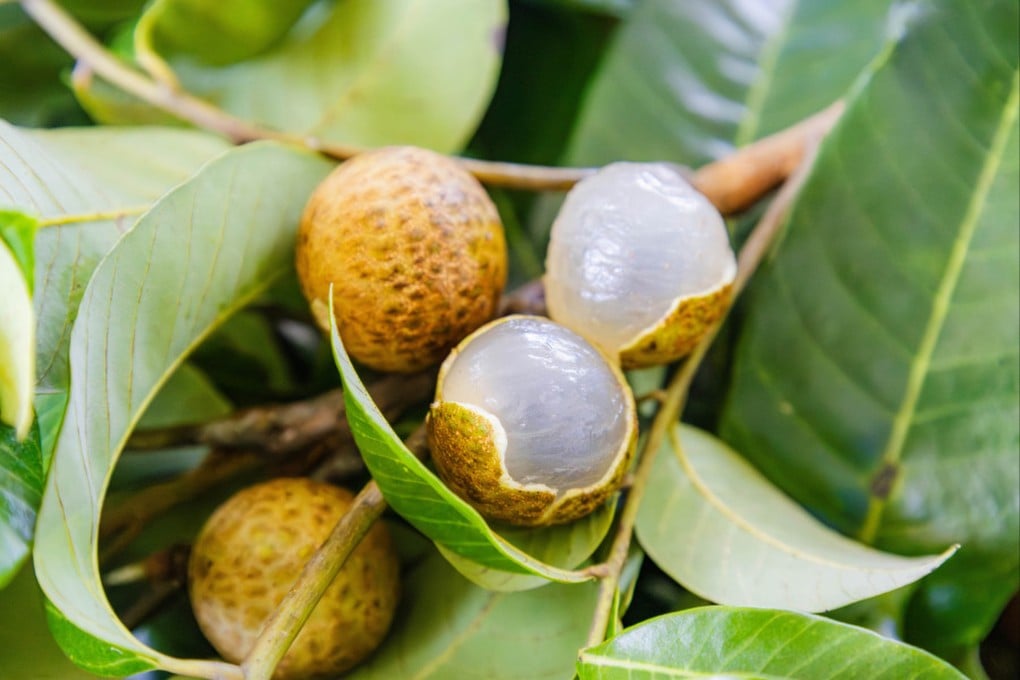
The new variety, named “Cuimi”, was bred using the Shixia longan – a popular cultivar in Guangdong province – as its maternal parent and a lychee as its paternal parent, according to the research team. The hybrid fruit breaks long-standing reproductive barriers between plant genera.
It has been planted across Guangdong, Sichuan and Yunnan provinces in southern China, with its yield this year reaching several thousand jin, a Chinese unit equal to 500 grams or 17.6 ounces. Trial sales are scheduled for mid-September.
01:58Durian growers in China focus on quality to meet huge domestic demand for pungent fruit
Speaking at an on-site demonstration hosted by South China Agricultural University (SCAU) in Guangzhou on August 9, Liu Chengming, a professor at the university’s College of Horticulture and the lead developer of the variety, told media that about 90 per cent of Cuimi’s genetic material comes from its mother. Consequently, its appearance and flavour lean closer to those of the longan.
Nevertheless, the hybrid has inherited several key traits from its father, including the cracked, textured skin characteristic of lychees, according to the team which said its flesh was tender, crisp and free of fibrous strands.
Compared with the Shixia longan, Cuimi delivered about double the yield, was more cold resistant and ripened 15 to 20 days later, the researchers said.
According to Liu, these characteristics could help expand longan cultivation areas in China while extending the fruit’s commercial selling season.
“The creation of Cuimi is significant for its breakthrough in intergeneric hybridisation, long regarded as a major technical obstacle,” the state-run newspaper Science and Technology Daily said on Monday.
AdvertisementSelect VoiceSelect Speed00:0000:001.00x