


‘Living fossil’: the blue-blood arthropod that has changed little in 445m years
Tenacious and confounding, the horseshoe crab pre-dates dinosaurs and has copper-based blood vital to vaccine safety
They pre-date dinosaurs, eat food using their legs and contain blue blood that we use to keep us healthy. Horseshoe crabs are the supreme, if offbeat, survivors of the invertebrate world.
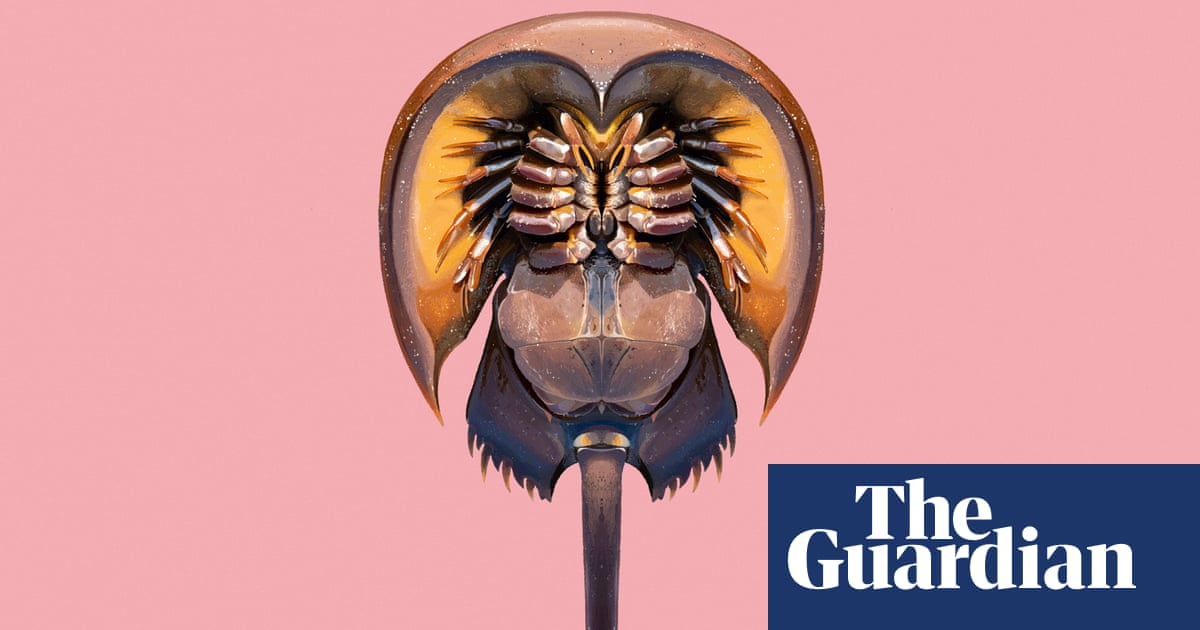
Often called “living fossils” for visually obvious reasons – horseshoe crabs resemble a sort of prehistoric helmet (their Japanese name translates as “helmet crab”) – these animals have barely changed appearance along a lineage that stretches back 445m years.
But even for a species that looks like it is stuck in a sort of Jurassic period costume party, horseshoe crabs still have the ability to confound people. For starters, they are not even crabs (they are arthropods but are more closely related to scorpions than crustaceans).
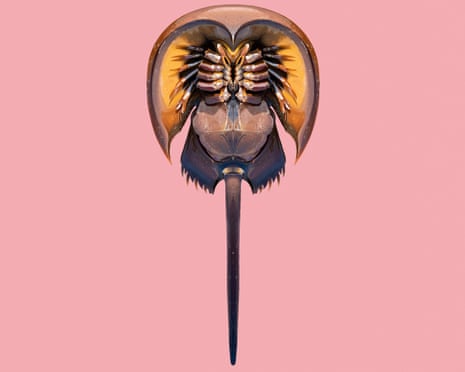
They have nine eyes scattered about their bodies and six pairs of legs, but only five of them are for walking – the last pair are used to crush up food such as clams and worms and shovel them into their mouths. They have a sharp, deadly looking tail called a telson which is, in fact, completely harmless and only used to flip them the right way up if they are turned over.
When situated dome-up, horseshoe crabs have a formidable defence against predators because of their shells. Draw their blood, though, and you may be surprised to see it is blue, not red.
This copper-based blood provides an incredible link in time between the era before stegosauruses and your routine vaccination appointment at the doctor or pharmacy, as it is used by the biomedical industry to help determine if there are any harmful toxins in vaccines.
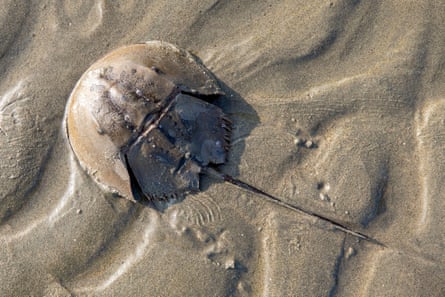
Horseshoe crabs are found in North America along shorelines from Maine to Mexico, while a related species, the mangrove horseshoe crab (Carcinoscorpius rotundicauda,above), is found in India, Bangladesh and south-east Asia.
The animals use beaches as a sort of nursery, much like sea turtles. Female horseshoe crabs will deposit about 4,000 eggs in clusters in the sand, usually at high tide and during a full moon. Many of these eggs become essential food for shorebirds.
While the species has survived several mass extinctions so far, the horseshoe crab now face a novel challenge due to the impact of humanity. Sea level rises and coastal development are squeezing out suitable habitat for the creatures, leading to some concerns over their long-term future.
“There’s a worry that rising sea levels are eroding sandy beach habitat, and once that spawning area on the beach is gone then it’s gone,” said Prof Mark Botton, who has studied horseshoe crabs for nearly 50 years.
after newsletter promotion
Botton, whose interest in these creatures as a young man was initially piqued by witnessing a documentary crew from David Attenborough’s BBC Life on Earth series filming horseshoe crabs in the Delaware Bay, has found, though, that the species is unusually hardy.
As well as having an internal cocktail of chemicals that helps them survive hostile conditions, horseshoe crabs are adept at eking out a place to survive even if the odds are against them. You do not get to hang around for 445m years without a certain tenacity, after all.
“They are very good at finding small patches of sandy habitat even if a coastline has been almost completely concreted over,” said Botton, an ecologist at Fordham University. “Don’t expect them to go extinct any time soon. We shouldn’t sell them short or write them off just yet.”
-
It’s invertebrate of the year again! From 3-12 August, every day we will profile one of the thousands of amazing invertebrates that our readers have nominated. And then, when you’ve heard about all of them, we’ll open the voting so you can choose your favourites. Don’t hesitate to get in touch with thoughts and ideas: email us at environment.desk@theguardian.com with Invertebrate in the subject line.
Explore more on these topics