


Muslim-Muslim ticket: Ex-Imo gov candidate condemns cleric’s ‘infidels’ comment
August 11, 2026 9:01 am

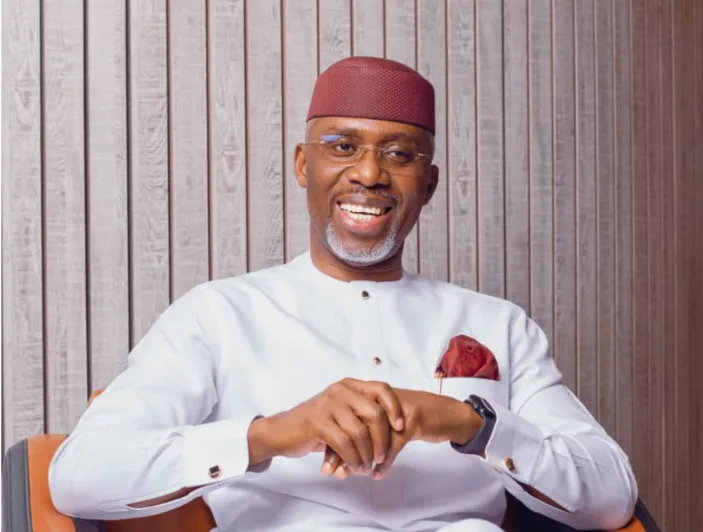
A former governorship candidate in Imo State, Uche Nwosu.
A former governorship candidate in Imo State, Uche Nwosu, has condemned the “infidels” comment attributed to a prominent Plateau-based Islamic cleric, Sheikh Sani Jingir, over his advocacy for the continued adoption of Muslim-Muslim presidential tickets.
Nwosu, in a statement issued in Abuja on Monday, described Jingir’s remarks as divisive and capable of fuelling religious tension in the country, urging religious leaders to promote tolerance and peaceful coexistence.
Jingir had, while speaking at an event attended by some All Progressives Congress governors, including Kano State Governor, Abba Yusuf, and his Jigawa State counterpart, Umar Namadi, renewed his support for Muslim-Muslim tickets ahead of the 2027 general elections.
The cleric also praised President Bola Tinubu for adopting the arrangement in the 2023 presidential election and urged his audience to obtain their Permanent Voter Cards ahead of the poll.
“I urge all of us here to go and get our voters’ cards ready. Let’s show the infidels their limit, who claim they are more populous than us in Nigeria. They are lying!” Jingir said.
Reacting, Nwosu said the statement was unacceptable and could undermine efforts to promote unity among Nigerians.
He said, “Jingir’s utterances were capable of creating unnecessary religious tension and undermining efforts to promote unity, peace and harmonious coexistence among Nigerians.
“No religion should be used as a basis for insulting, demonising or degrading another faith. Such statements do not serve the interest of Nigeria and should be condemned by all well-meaning citizens.
“Nigeria is a diverse nation made up of people from different regions, ethnic groups and religious backgrounds who have continued to live and work together.”
Nwosu urged religious leaders to use their influence to encourage tolerance and mutual respect, rather than making statements that could deepen mistrust between Christians and Muslims.
He added, “We must be careful not to allow provocative statements by individuals to destroy the bonds of friendship, brotherhood and cooperation that exist between Christians and Muslims across the country.
“At a time when Nigerians are looking forward to greater unity and peaceful coexistence, it is unfortunate for anyone, particularly a religious leader, to make statements capable of setting one group against another.”
The former governorship candidate also called on the Federal Government to take appropriate action where public utterances violate the law or threaten national unity.
“The government should not ignore statements that have the potential to threaten our peace and national cohesion. Where such utterances violate the law, the appropriate authorities should take necessary action in accordance with the law,” he said.
Nwosu further appealed to Christians and Muslims not to allow the comments of individuals to damage the longstanding relationship between the two faith communities.
“I appeal to both Christians and Muslims to remain calm and refuse to be divided by provocative comments. We must continue to recognise what unites us as Nigerians and reject anything capable of setting us against one another,” he said.
Nwosu’s reaction came a day after human rights lawyer, Deji Adeyanju, also condemned Jingir’s remarks, describing them as divisive and capable of fuelling religious tension.
Adeyanju argued that Nigeria’s religious diversity required political and religious leaders to exercise restraint, urging them to promote national unity rather than deepen existing divisions.
The controversy centres on the Muslim-Muslim presidential ticket adopted by the APC in the 2023 election, when Tinubu, a Muslim from the South-West, contested alongside Kashim Shettima, a Muslim from the North-East.
The arrangement generated controversy among Christian groups and some political actors, who argued that it failed to adequately reflect the country’s religious diversity.
Supporters of the ticket, however, have maintained that competence and electoral choice should take precedence over religious balancing.
With the 2027 elections approaching, the debate over the religious composition of presidential tickets has again emerged as a major political issue, particularly following renewed calls by some groups for the continuation of the Muslim-Muslim arrangement.
The PUNCH journalist, Adebayo, has over 20 years of experience covering politics, health, metro, entertainment and properties
All rights reserved. This material, and other digital content on this website, may not be reproduced, published, broadcast, rewritten or redistributed in whole or in part without prior express written permission from PUNCH.
Contact: [email protected]