


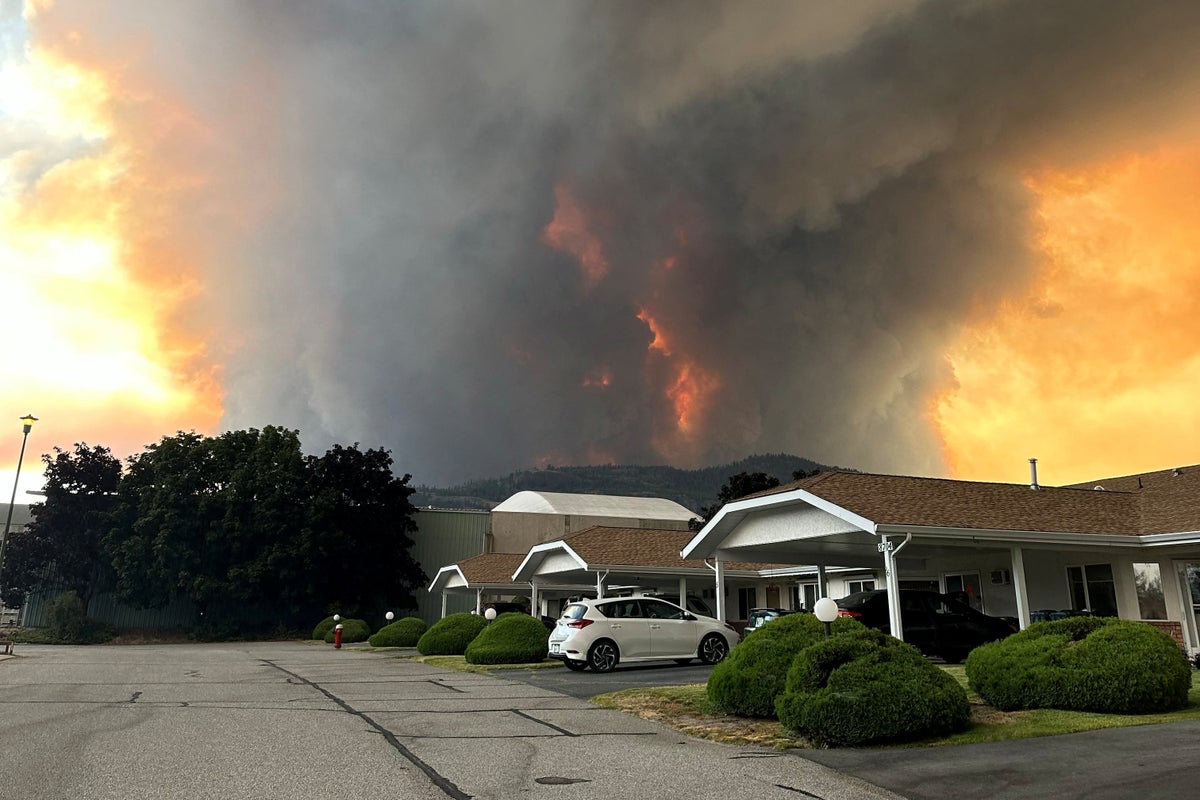
British Columbia has declared a state of emergency after tens of thousands were ordered to flee a fast-moving wildfire that nearly doubled in size overnight.
The Bald Range wildfire rapidly grew to about 9,500 hectares (23,500 acres), prompting evacuation orders in Summerland, Peachland and other districts west of Okanagan Lake in the southern interior.
The region produces most of B.C.’s wine and is Canada‘s second-largest wine-producing area.
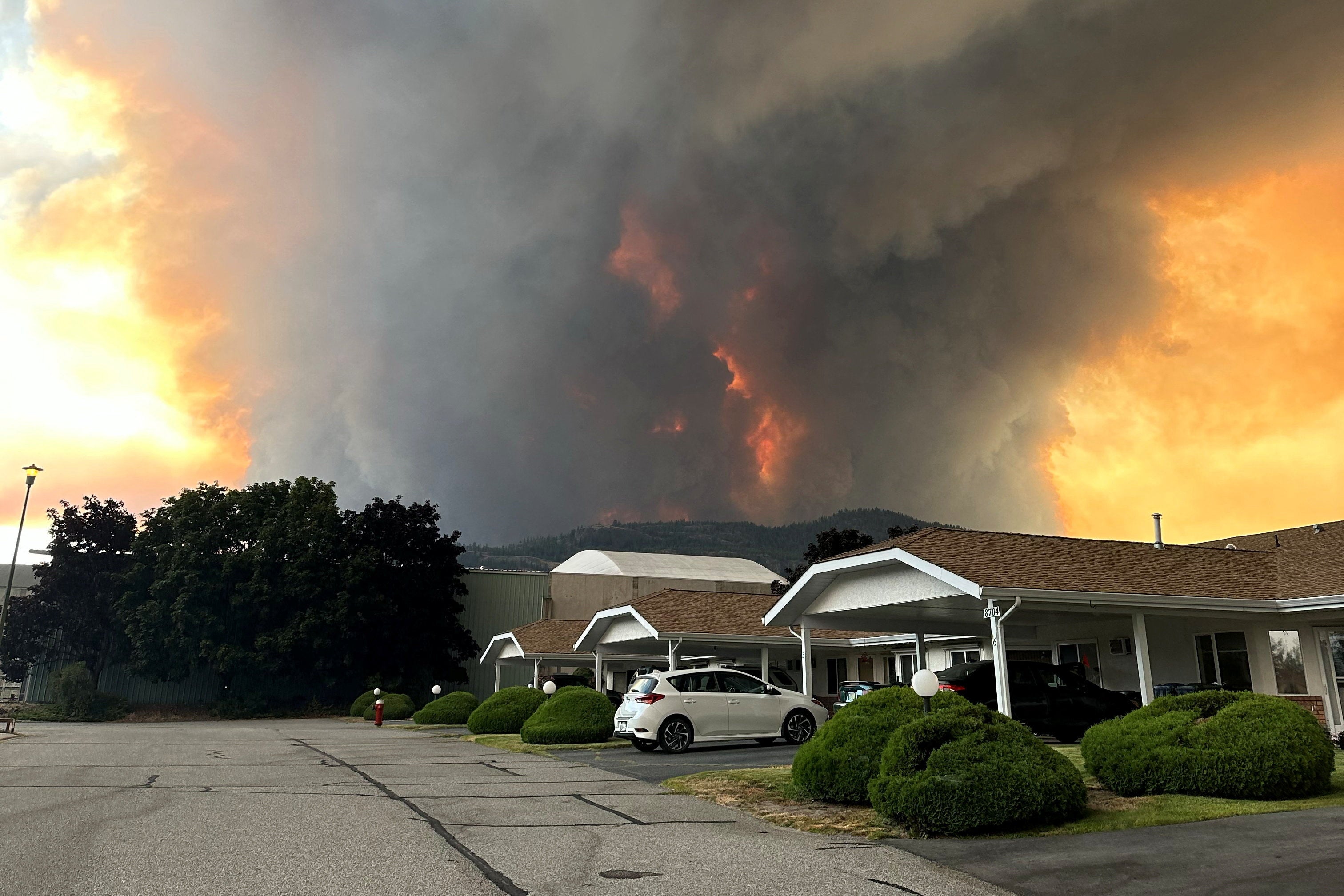
Premier David Eby said Saturday that one fire official had likened the blaze, which is burning out of control, to “a bomb going off”.
“He described flames on [a] 100-foot tree, flames going 200 feet above that, and the fire creating its own weather system, which creates lightning, which then feeds on itself,” he said.
“Homes have been lost, and properties have been destroyed. Some people became trapped as conditions changed very quickly, and needed to be rescued.”
 open image in gallery
He added that it remained a very dynamic and threatening situation.
Summerland has a population of about 12,000 people, according to the 2021 census, and Peachland is home to about 6,500 residents.
A state of emergency grants the provincial government immediate access to special powers including travel restrictions and supply protections to prevent price gouging, and specific tools to coordinate rescue work.
Officials said the Bald Range wildfire triggered the largest evacuation event so far this summer and more than 20,000 people across B.C. have been forced to evacuate their homes.
 open image in gallery
“A lot of farms have been affected. We don’t know how many structures have been lost. They’re still busy fighting the fire,” Summerland Mayor Doug Holmes said.
“We have to brace ourselves for the worst.”
‘You could see it behind the hills’
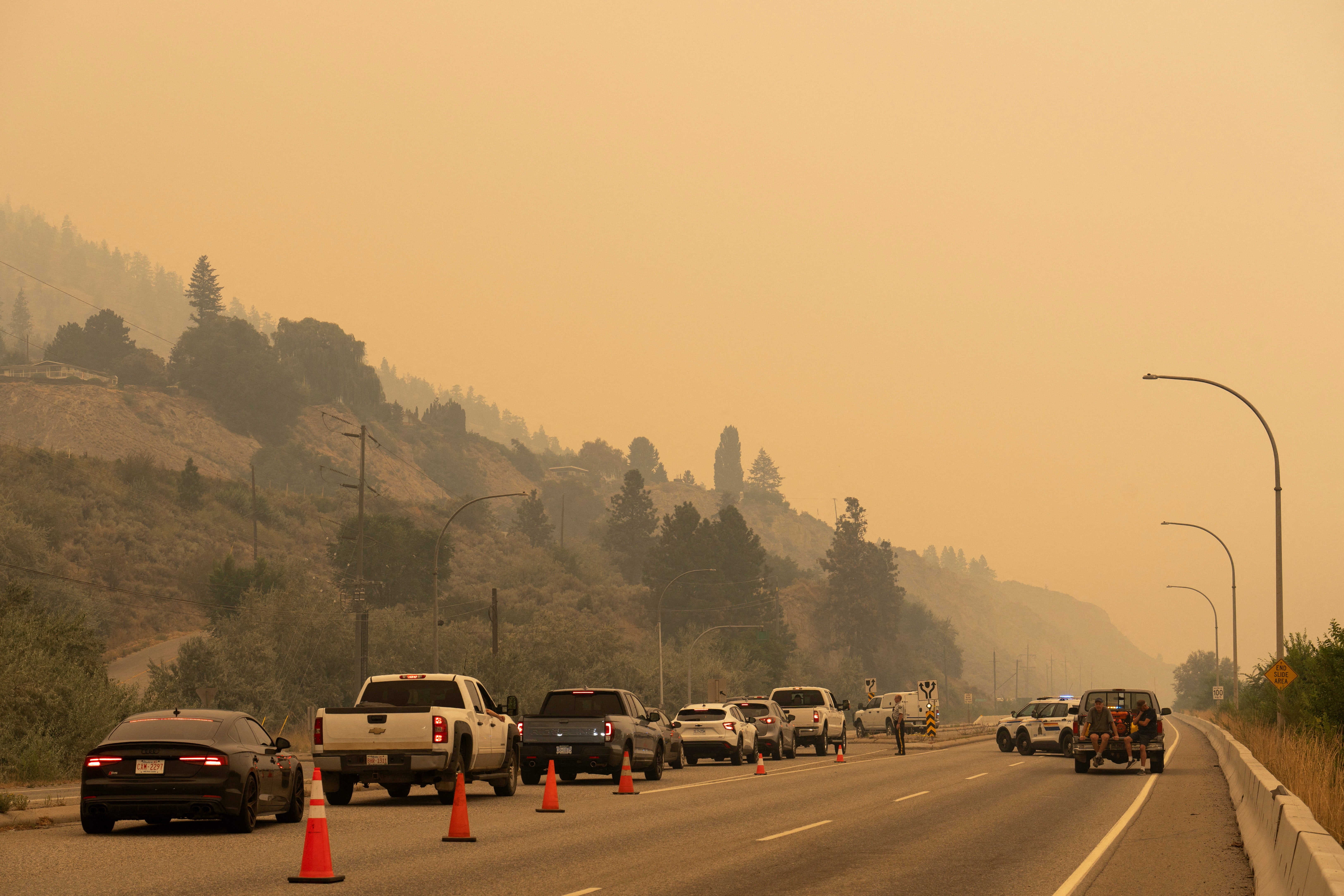
Many residents left overnight, driving south to Penticton or north to Kelowna before highways began to close.
Terry Fries of Summerland was watching a football game on Friday night when a neighbor advised him to get a bag ready as the fire grew.
“At the time, it was still farther back, and you could see it behind the hills,” he said.
 open image in gallery
When B.C. authorities issued the evacuation order around midnight, he and his family drove about 45 km (28 miles) north to the city of Kelowna.
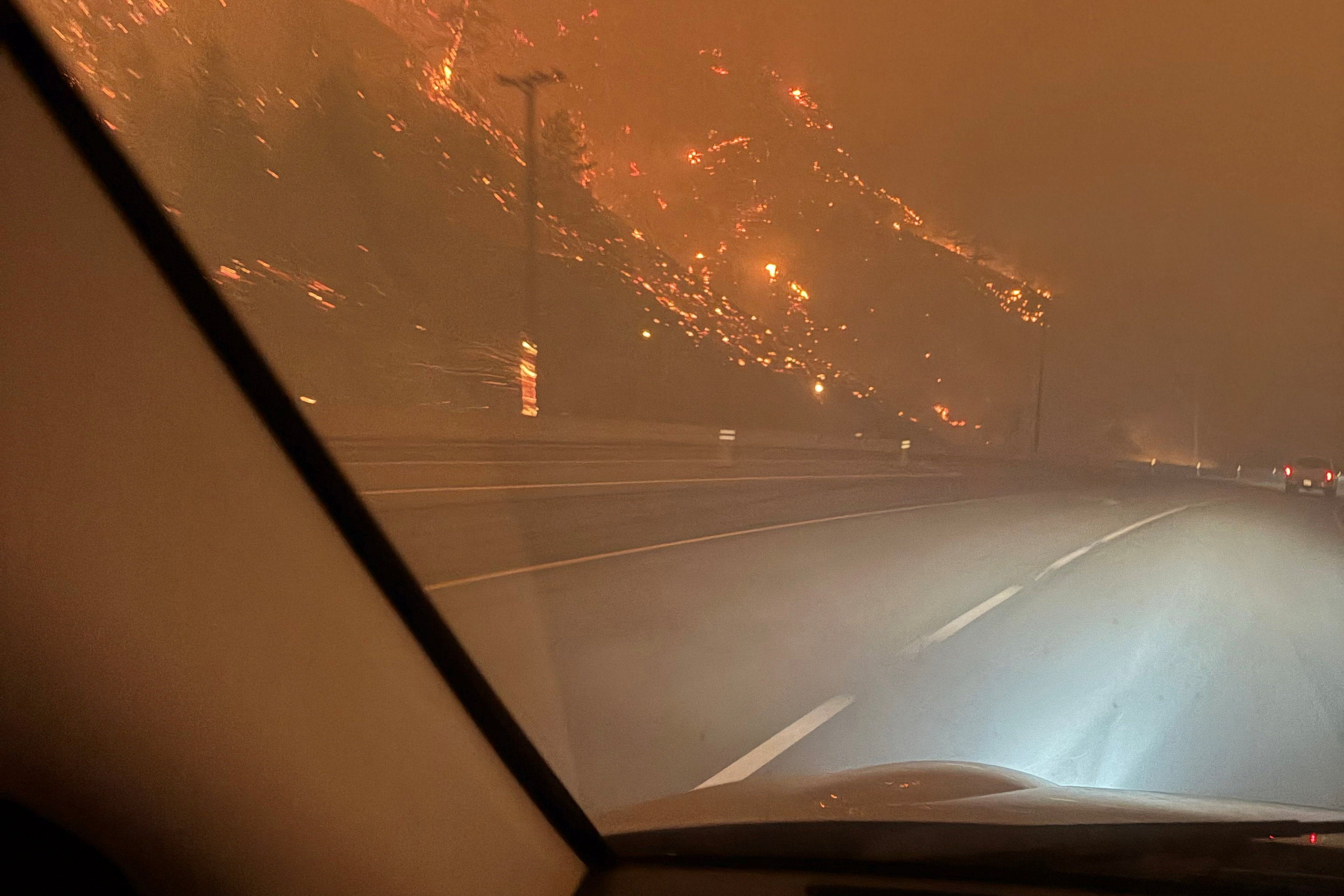
Residents recorded videos of fires by the highway and of structures burning as they evacuated. By Saturday afternoon, ashes began to settle on cars and houses in nearby areas as the fire painted the skies with orange hues.
Summerland lost power on Saturday and issued a boil-water notice for residents. The municipality said untreated water had entered the system after it bypassed the water treatment plant due to the wildfire.
Several Canadian provinces, including Ontario and Quebec, have battled blazes this year as hot, dry weather fueled wildfires in dense forest areas. Firefighters from Mexico, Australia, France and New Zealand have helped combat the fires.
In B.C., where hot and dry conditions have increased the risk of more fires spreading, about 1,500 firefighting personnel were battling more than 100 fires. The province has issued 40 evacuation orders and 49 alerts.
Fires have burned through 4 million hectares (9.9 million acres) in Canada this year, according to the Canadian Interagency Forest Fire Centre.