



The Independent Home Channel is powered by Octopus Energy.
When it comes to sustainability, Aanand Davé knows his onions. An industrial designer and solutions architect, he develops large-scale, data-driven system deployments of solar installations, anaerobic digesters, and other pieces of infrastructure that future-proof companies, making them more efficient and environmentally sound.
Unsurprisingly, he was keen to bring this kind of know-how to his home life – and to help show others how easy and achievable smart home technology can be. So when, along with his wife Leanne and his four-year-old son, he moved into a new five-bedroom house on the edge of an Area of Outstanding Natural Beauty in the Cotswolds, he set about transforming the family home into a light-touch, fully optimised smart home.
“Sustainability is obviously the driving force, the philosophy behind it,” he says, “from both an environmental and an economic efficiency point of view. And we want to be as resilient as possible.”
The data-driven approach to self-sufficiency
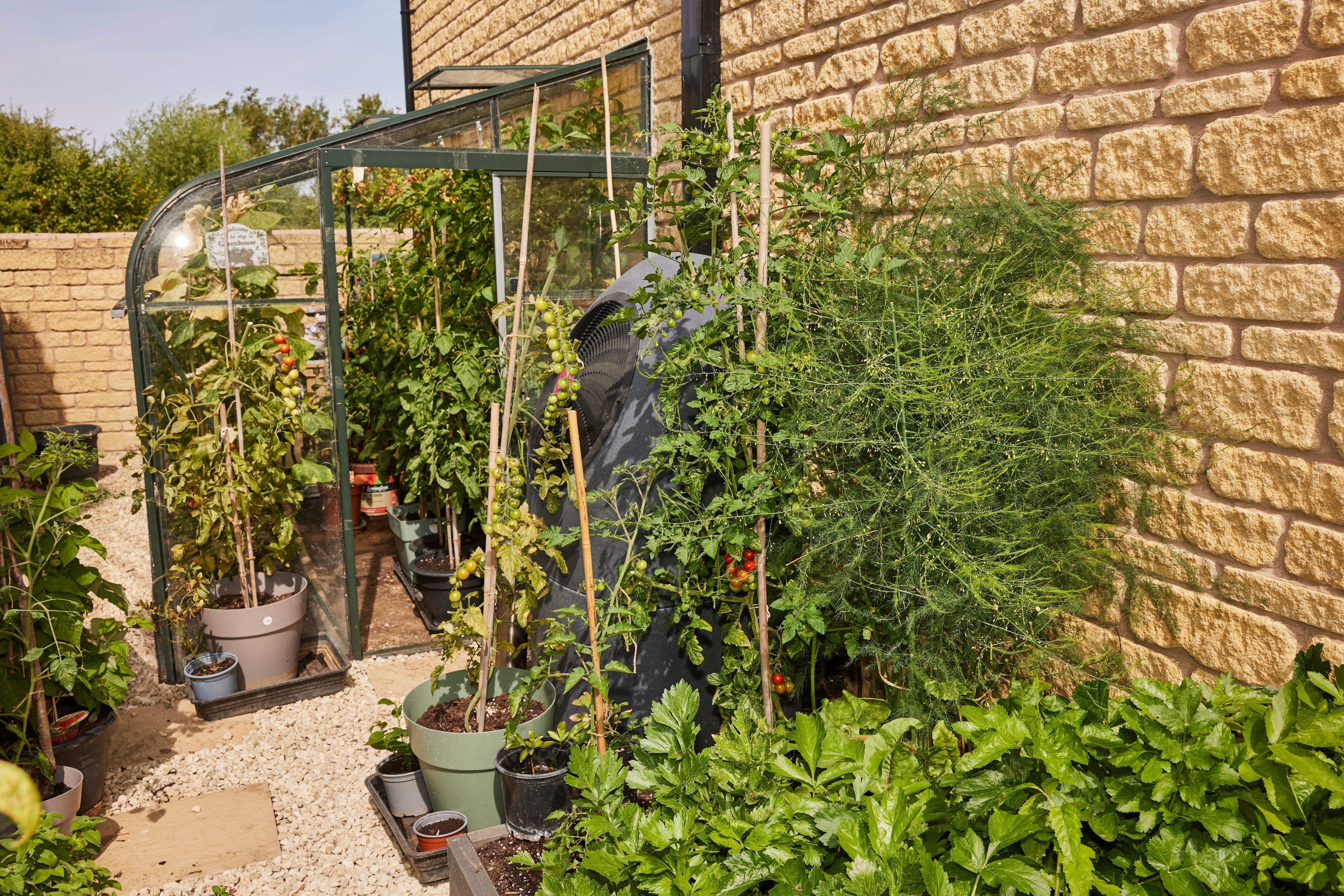
While Aanand brought a practical eye to setting up the house, it quickly became a true whole-family project. “Leanne’s a diabetes specialist nurse, so she’s always been into the health benefits of horticulture. Self-sufficiency has always been a big part of her life and so when we moved we shared the intention that we’d try to become more self-reliant. Stay off the grid as much as possible. Grow our own food.”
So, before they started their full-scale overhaul of their house with Octopus Energy, they placed sensors around the property so they could use the data to work out the best configuration of the tech. “We try to grow year-round and so positioned our air-source heat pump in space that gave it a dual purpose. Heating our home during the colder months, and acting as cool-air conditioning system for our greenhouse in the summer. This may seem contradictory but the cool air has definitely helped us sustain cucumber, grape and tomato growth in this heat, and with minimal water requirements.”
The Octopus Cosy 9 air-source heat pump is part of a powerhouse configuration, which includes 24 solar panels spread across both sides of the roof, a Tesla Powerwall battery, and an EV charger.
Slashing the payback period
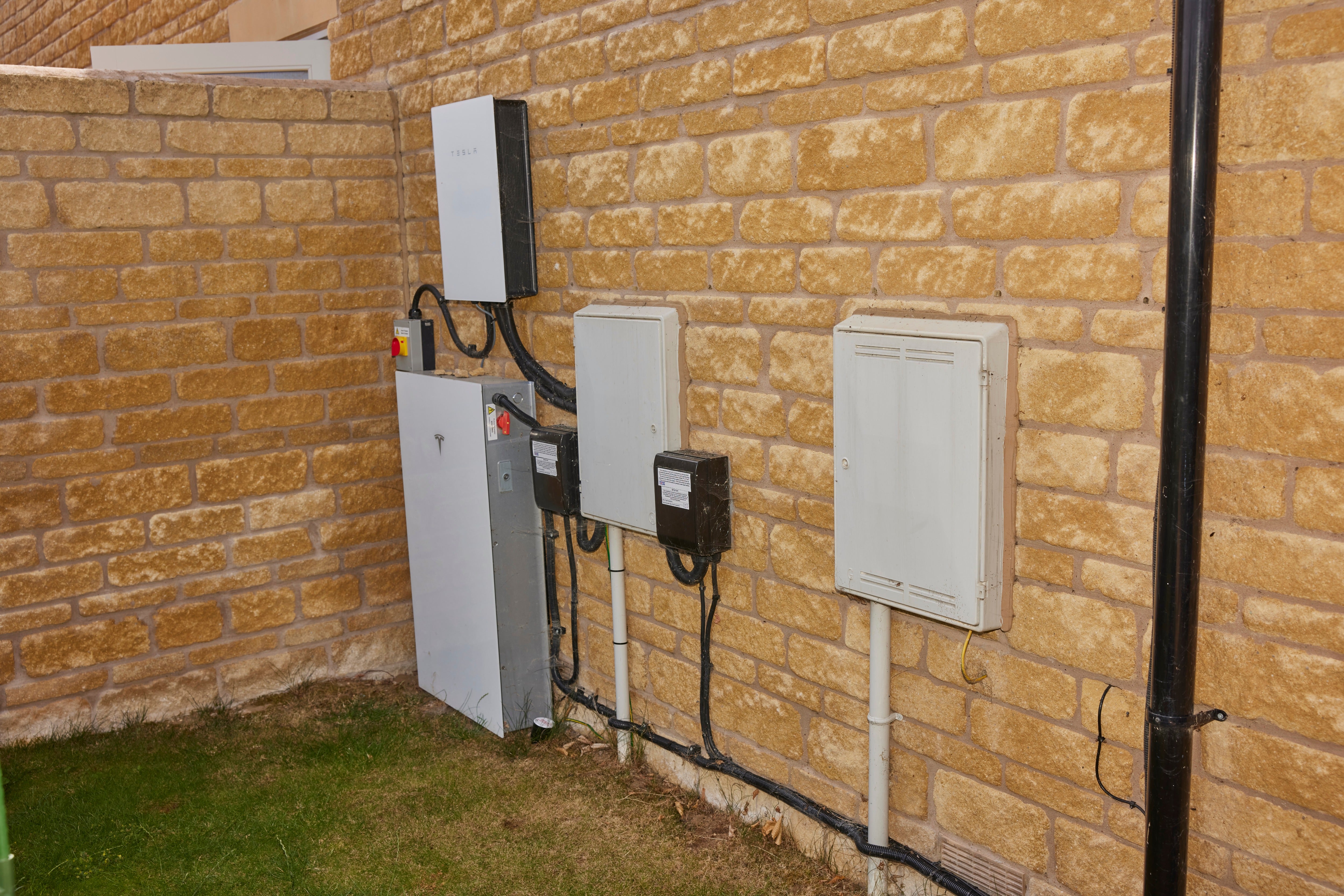
“With this kind of ecosystem of interconnected electrical products, you’d imagine that you’re going to spend the next decade or more paying it off,” says Davé. When designing this system, Aanand considered parameters like the solar panel quantity and export limits, against variables like weather, seasonality and lux-levels. “After modelling these and testing a few scenarios, I realised that factors like increasing export limits, (moving from a single-phase to 3 phase power cycle) isn’t the only lever for reducing your ROI payback figure.
“Turns out it’s actually everything working together that has the biggest positive impact,” Davé continues. “We’re charging the car overnight for a fraction of the cost of petrol, running the heating system from energy stored in the Powerwall and using our own solar rather than buying electricity back at whatever the price cap happens to be that quarter. Realistically, we’ve gone from something like a 10-year payback if you’re just looking at solar and battery on their own, down to somewhere in the five to seven year range for the whole system, once you add all that up.”

See if an Octopus heat pump could save you money.
Advertisement
See if an Octopus heat pump could save you money.
Advertisement
Such is the family’s self-sufficiency that they have had the gas to the property cut off entirely, eliminating their daily gas standing charge for good.
“Octopus supported me in coordinating with National Grid to remove the meter for free,” says Davé. “Because our account was so far in credit, once it was closed they actually ended up refunding us more than £300.”
Year-round efficiency

And in terms of its operational efficiency, the system has proved to be effective in all seasons. “There’s a lot of talk about houses not getting properly warm on an air-source heat pump. But that is just not true. Sure, it doesn’t give you intense blasts of heat like a gas radiator, but it does radiate heat throughout the whole property at a constant rate. So when you walk into a room, it just all feels comfortable.”
The solar panels are also very-effective year-round, even through a Cotswolds winter. “Their output isn’t governed by just how hot and sunny it is,” says Davé. “If anything, panels are marginally more efficient on a bright, cool day than a scorching one. It’s light they need, hence designing the system based on lux-levels to maximise the amount of light it gets over time.
“A bright but overcast day will still generate a useful amount, just nowhere near what you’d get in full sun. Living here, summer does most of the heavy lifting: June will generate many times what December does, so the system evens out your bills across the year, minimising your operational costs.”
To keep the monthly outlay low, the family are on the Intelligent Octopus Go EV tariff, designed for those who drive electric vehicles. While the standard IOG rate is an already competitive 8p p/kWh, because Davé drives an Octopus Electric Vehicle (OEV), he unlocks an even cheaper rate.
When asked how much it is costing him to run the air-source heat pump, all the electricity for the house, and charging the car, he quickly pulls up the app on his phone. “Last month it was £9.”
Curious about upgrading your home energy? Get a custom quote for heat pump installation and see how quickly your investment could pay off.