


FG plans eight sports, education centres of excellence
August 5, 2026 6:43 pm

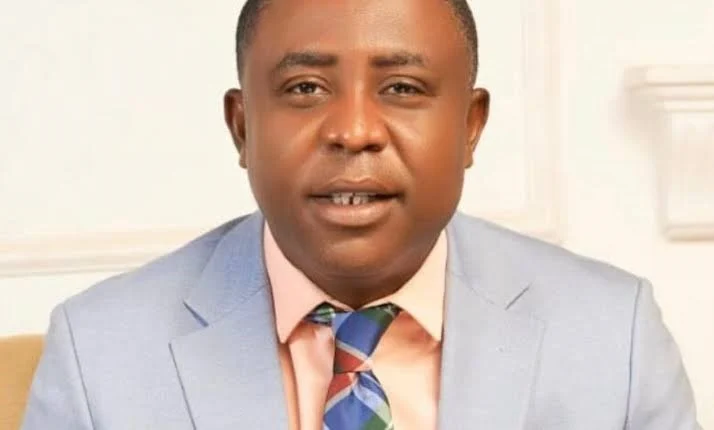
Minister’s Special Adviser on Media and Communications, Ikharo Attah. Photo: TheDaily Fact
The Federal Government has unveiled a new initiative that will establish eight Sports and Education Centres of Excellence across selected tertiary institutions as part of efforts to retain Nigeria’s sporting talents, create jobs, improve security and position sports as a major contributor to economic growth.
The initiative, known as the National Sports and Education Excellence Programme was unveiled on Wednesday in Abuja by the Minister of Education, Dr. Tunji Alausa, alongside the Chairman of the National Sports Commission, Shehu Dikko.
The programme is a joint initiative of the Federal Ministry of Education and the National Sports Commission under President Bola Tinubu’s Renewed Hope Agenda.
According to a statement issued by the Minister’s Special Adviser on Media and Communications, Ikharo Attah, the programme is designed to integrate quality education with elite sports development by establishing specialised Sports and Education Centres of Excellence in selected tertiary institutions.
The first phase will commence this year at the University of Ibadan, Ahmadu Bello University, Zaria, Federal College of Education, Okene and Babcock University, while additional centres will be rolled out in subsequent phases.
Speaking at the unveiling, Alausa described the programme as one of the most transformative reforms in Nigeria’s education sector, saying it would produce world-class athletes while developing professionals capable of driving growth across the sports industry.
“The future of sports lies not only in winning competitions, but in developing people. Through this initiative, we are producing athletes who will also become coaches, sports scientists, physiotherapists, administrators, entrepreneurs, researchers and innovators. We are investing in human capital that will continue to serve our nation long after competitive careers have ended,” he said.
The minister said the programme would end the long-standing challenge of talented young Nigerians having to choose between education and sports by creating an environment where both can be pursued simultaneously.
He added that the initiative would gradually integrate structured sports development pathways into basic and senior secondary education, expand opportunities for young people, reduce youth involvement in crime and other social vices, promote national cohesion and strengthen human capital development.
Alausa also argued that sports should be viewed as an economic sector capable of generating employment and attracting investment.
“For too long, many of our gifted athletes have sought opportunities abroad because we lacked a structured system that combines education with elite sports development. N-SEEP changes that narrative. We are building world-class institutions where Nigerian talents can learn, train and succeed at home while earning globally recognised qualifications,” he said.
According to him, the programme will also produce professionals in sports medicine, rehabilitation, sports science, coaching, sports technology, facility management, event management, research, media and administration, while stimulating entrepreneurship and private sector investment.
Minister of State for Education, Prof. Suwaiba Sa’id Ahmad, described the initiative as a landmark reform that would redefine the relationship between education and sports by allowing talented students to excel academically while pursuing sporting careers.
She called for flexible academic calendars, continuous assessment systems and examination schedules that would accommodate elite athletes without compromising educational standards.
Chairman of the National Sports Commission, Shehu Dikko, said the initiative marked a defining moment in Nigeria’s efforts to build a globally competitive sports industry anchored on education, innovation and strategic partnerships.
He disclosed that the commission was strengthening sports infrastructure in educational institutions and expanding coach education through the National Institute for Sports.
Dikko also announced plans to establish Sports Centres of Excellence in Unity Schools as well as state and private schools to identify talents early before they progress into tertiary institutions.
He added that discussions were ongoing with international sports bodies, including FIFA and CAF, to secure global accreditation for sports-related academic programmes in Nigerian institutions.
Director-General of the National Sports Commission, Bukola Olopade, said the programme goes beyond winning medals by creating a sustainable pipeline of coaches, sports scientists, researchers, educators, administrators and technical officials needed to support a modern sports industry.
Under the programme, participating institutions will establish Faculties of Sports Science offering internationally benchmarked programmes in coaching, sports medicine and rehabilitation, sports science, sports technology and data analytics, sports business, facility management, event management and sports administration.
The institutions selected for the programme include the University of Ibadan, University of Nigeria, Nsukka, University of Benin, University of Jos, Ahmadu Bello University, Zaria, Muhammad Buhari University, Maiduguri, Federal Polytechnic, Offa, Federal College of Education, Okene and Babcock University.
The government said the initiative would create a seamless pathway for identifying and developing sporting talents from schools through tertiary education while strengthening research, innovation and entrepreneurship in Nigeria’s sports sector.
The launch of N-SEEP forms part of the Federal Government’s broader education reform agenda aimed at aligning tertiary education with national economic priorities. In recent months, the Ministry of Education has introduced reforms focusing on Technical and Vocational Education and Training, digital skills development and stronger collaboration between education and industry.
Nigeria has long struggled with inadequate sports infrastructure and the migration of talented athletes abroad due to limited opportunities for combining academic advancement with elite sports training.
Government officials say the new programme is intended to address that gap by creating structured talent development pathways within Nigerian institutions while supporting the country’s ambitions to grow the sports economy, create jobs and improve youth engagement.
Deborah Tolu-Kolawole is a journalist at Punch Newspapers with four years of experience covering Nigeria’s vast education sector as well as related areas such as politics, health, security, and labour. She blends rigorous reporting with digital storytelling to bring clarity and insight to complex issues affecting learners, educators, and policymakers. Deborah was a nominee for The Future Awards Africa (TFAA) Prize in Journalism, recognising her impactful reporting and contributions to Nigerian media. Her work reflects strong newsroom experience, editorial judgment, and a commitment to accurate, audience-focused journalism. In addition to her reporting, she is fluent in multiple languages and serves as a contributing member of The Punch editorial board.
All rights reserved. This material, and other digital content on this website, may not be reproduced, published, broadcast, rewritten or redistributed in whole or in part without prior express written permission from PUNCH.
Contact: [email protected]