


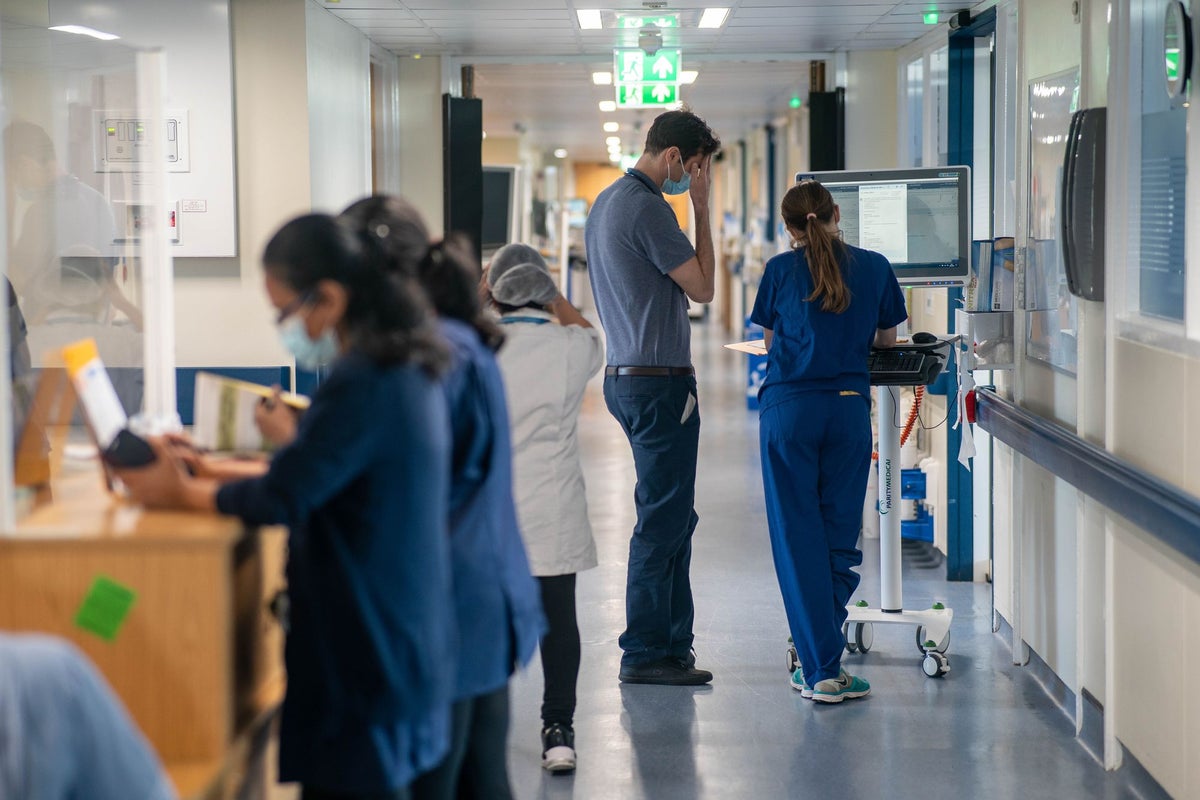
Racism within the NHS is reportedly on the rise, with staff subjected to vile abuse including being called “monkeys” and patients refusing treatment from non-white healthcare professionals.
Experts, including the Society of Radiographers (SoR), have highlighted a “noticeable” increase in racist incidents from patients over the past 18 months.
This abuse includes derogatory terms such as “dirty foreigners” and xenophobic comments about “people coming over here, taking our jobs”.
A recent poll of SoR members disturbingly revealed that some staff feel compelled to “accept” such racist remarks as an unavoidable part of their job.
 open image in gallery
Dean Rogers, executive director of industrial strategy and member relations, said: “The rise in incidents of racism over the last year and a half is unconscionable and unacceptable – and it’s a poor reflection on us as a society.
“The NHS has a diverse workforce – which is one of its strengths.
“We are clear: discrimination, harassment, racism, bullying or intimidation – whether expressed verbally or in behaviour – is unacceptable and has no place in the NHS.”
The SoR is calling for the NHS to record incidents of racism and monitor how they are dealt with.
Comments received as part of the SoR poll of members include:
– One worker said: “Some patients always complain because of the colour of skin of people attending them.”
– Another spoke of “patients not acknowledging you but directing questions to your junior”.
– One radiographer spoke of “patients describing healthcare staff as dirty foreigners”.
– And another said: “I have witnessed a colleague being called a monkey by a patient.”
– A sonographer reported that a white man refused to let a sonographer scan his pregnant wife, saying: “I don’t want anyone from any ethnic background touching my woman.”
– On another occasion, a patient arriving for a chest X-ray refused to let a black radiographer conduct the X-ray, stating: “Black people frighten me.”
– One therapeutic radiographer working in Yorkshire told the SoR: “I felt it had happened to them so much that they just accepted it as something they had to put up with.”
Paul Awah, a Bedfordshire-based diagnostic radiographer originally from Nigeria, said: “Patients claim not to hear what I’m saying, or say they can’t understand me. English is the only language I speak, and I believe I’m clear enough when I’m speaking to patients.
“It’s happened to me on two different occasions, when the patient is looking at me quite clearly in terms of my skin colour.”
On three occasions patients have asked him whether he has cannulated someone before when he has been called in to deal with more complicated cases.
“They’re saying: ‘If somebody who’s Caucasian has tried and failed, how dare you bring a Black man now?’” he said.
 open image in gallery
A sonographer of Asian descent working in the Midlands said that several patients have said to her: “This country isn’t the same, with all those people coming over here, taking our jobs.”
She said that racist incidents have increased in the last 18 months, adding: “It’s become more prevalent – it’s in the media and certain political parties and TV channels, so people are openly expressing their views.”
Mr Awah added: “It’s definitely got worse – people are more expressive now.
“What used to be something people wouldn’t say – now the rhetoric has changed. Immigrants are blamed for the cost of living, energy bills, the worsening situation in the country – and people feel it’s okay to say it.”
Mr Rogers added: “Racist behaviours undermine patient care and go against our shared values of integrity, equity, courtesy and openness.
“We want commitment and clear accountability when it comes to addressing anything that makes the NHS an unsafe environment in which to work. Together, we want to ensure that the NHS is safe, inclusive and proud of the diversity that makes us stronger.”
Figures from the latest NHS Staff Survey, which was published in March show he percentage of staff who have experienced discrimination in the last 12 months from patients is at a five-year high.
Some 9.26 per cent of staff in 2025 said they personally experienced discrimination at work in the last 12 months from patients or service users.
This is up from 9.25 per cent in 2024, 8.57 per cent in 2023, 8.38 per cent in 2022 and 7.91 per cent in 2021.
Thomas Simons, chief human resources and organisational development officer at NHS England, said: “Racist abuse towards NHS staff is completely unacceptable and has no place in our health service.
“Our new national staff standards are clear that NHS organisations must take meaningful action to prevent and respond to racism, support affected staff and ensure there are clear consequences for patients who racially abuse or discriminate against NHS staff – including the option to refuse care in non-emergency situations.”