


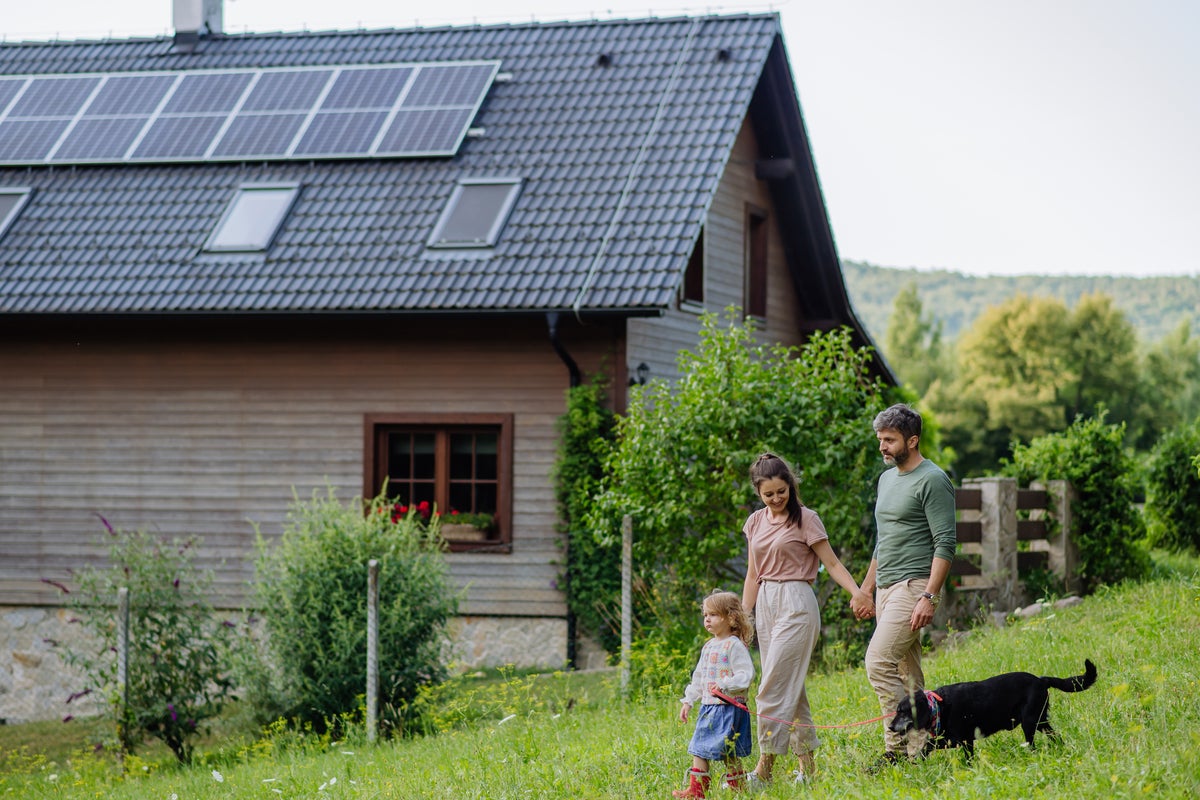
When Julia Rockwell and her husband, Steve, retired and downsized to a bungalow in Little Clapton, Essex, a little over a year ago, they weren’t planning on joining the green energy revolution. But moving to a new neighbourhood changed everything. One of their new neighbours had already embraced solar power, and his enthusiasm proved infectious.
“Initially we were quite sceptical about solar panels,” Julia admits. “We had this idea that they were expensive, high-maintenance, and probably wouldn’t deliver on their promises.”
Intrigued by their neighbour’s first-hand success, the couple decided to get a quote from Octopus Energy. Even as they weighed up the decision, they harboured lingering doubts – particularly regarding the upfront cost – while some of their friends remained firmly unconvinced. Ultimately, they decided to take the plunge, installing 17 panels on their roof.
Harnessing the Essex sunshine
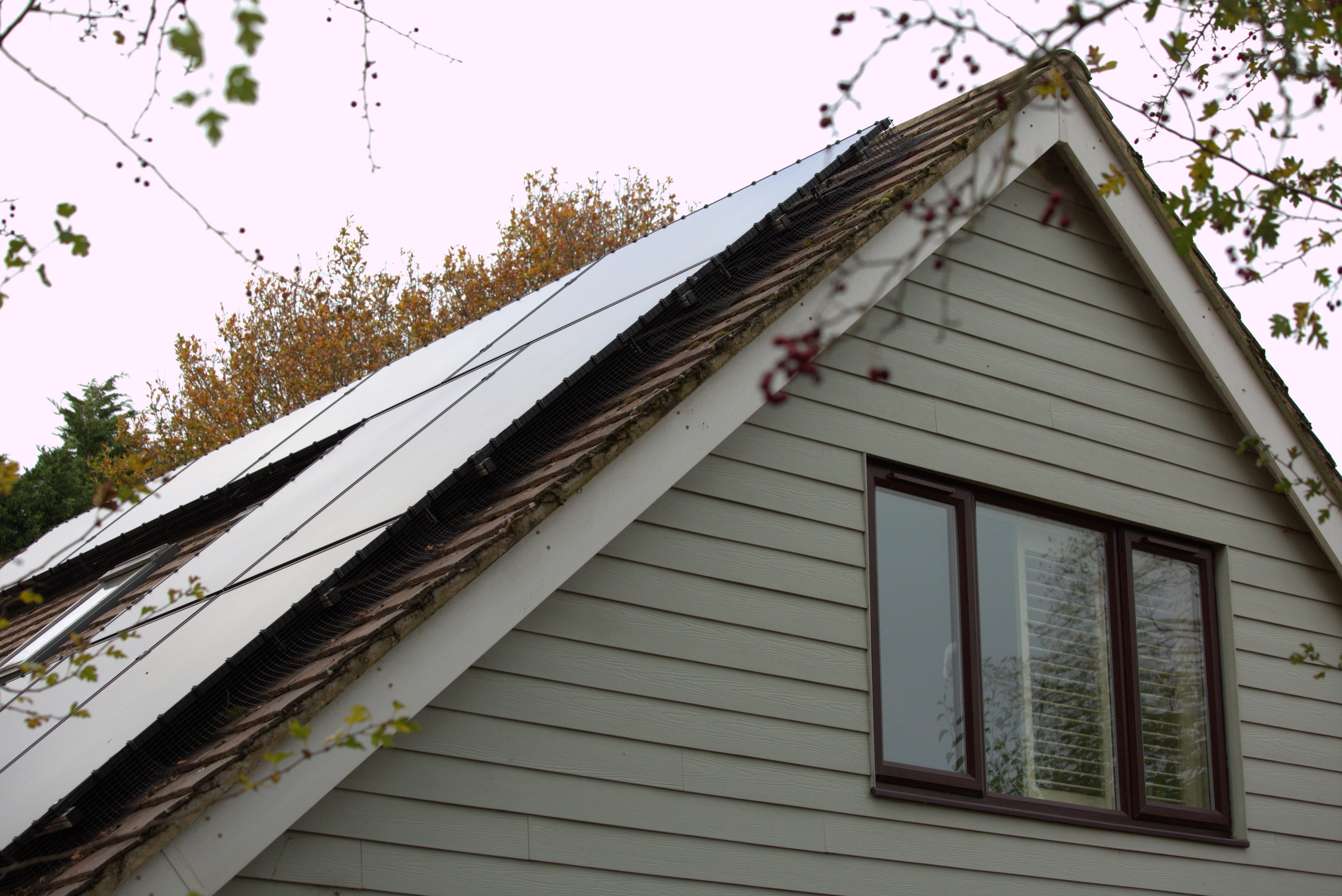
“When we bought the bungalow, we were specifically looking for a south-facing garden,” Julia says. “As it turned out, that made the house absolutely ideal for solar. We have a large, uninterrupted south-facing roof, which allows us to fit a decent-sized system.”
The transition from decision to generation was remarkably swift. The installation took just five days: one day to erect the scaffolding, three days of technical work, and a final day to pack up and leave.
The aesthetic impact was also a pleasant surprise. “They’re all installed at the back of the property, so they are completely invisible from the front of the house,” says Julia. “They just look incredibly neat and tidy.”
However, the most satisfying shift has been financial. “Our energy bills have actually gone into credit,” Julia says. “We are currently selling far more electricity back to the grid than we are actually using.”
Smarter storage, lower bills
The true game-changer for the Rockwells was pairing their 17 panels with a Tesla Powerwall battery, which has completely transformed how they think about household energy.
“Because we have a heat pump installed, we’re on the Cosy Octopus tariff,” Julia explains. “That gives us three hours of super-cheap electricity in the afternoon, a couple of hours from 10pm, and another three hours in the early hours of the morning. We now time our washing machine and dishwasher to run during those windows.”
The smart tech does the heavy lifting for them. “The Tesla battery is incredibly clever. It automatically charges itself up from the grid when the tariff is at its cheapest, meaning we can draw from that stored, low-cost power when grid prices spike during the day.”
For the Rockwells, the beauty of this integrated system is its absolute simplicity. “We don’t have to micro-manage it at all,” Julia says. “We just sit back, look outside at the sunshine, and know we’re making money.”
Driving on rays
.png)
The financial rewards have been rapid. In their first six months alone, the system generated more than £300 worth of electricity – prompting the couple to take the final step in their green transition. “Because we were generating so much excess power, we decided to switch to electric cars,” Julia says. “Now, our home and our transport are totally electric.”
Looking back, Julia has no regrets and strongly encourages others to look past the initial hesitation.
“If you are looking for a way to keep your long-term energy costs low, and you have savings sitting in a bank account earning virtually nothing, it is an incredibly smart investment,” she says. “Plus, it’s bound to add value to the property. Any future buyer will see the system is already up, running, and saving money – so if we ever do decide to sell, we’ll reap the rewards of that, too.”