


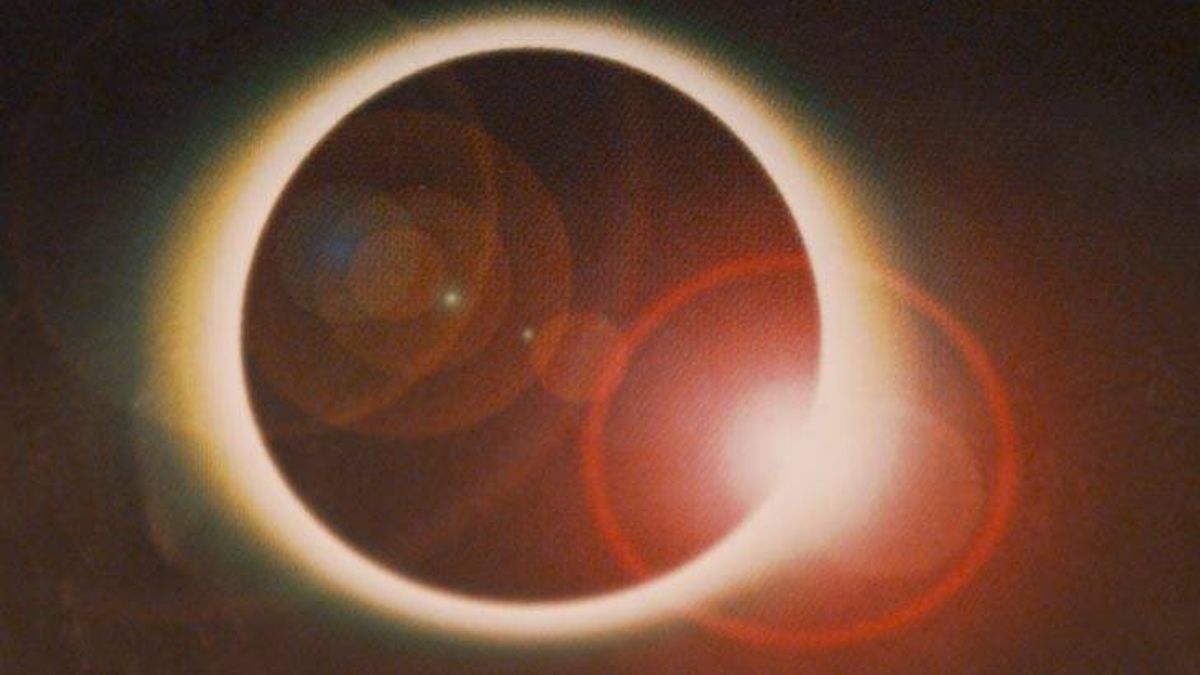
Dust off your protective eyewear as Scotland gears up for a spectacular partial solar eclipse next month. On Wednesday, August 12 the Moon will pass between the Sun and Earth, temporarily obstructing sunlight from reaching our planet.
The Royal Greenwich Observatory confirmed the UK will witness its most dramatic solar eclipse since 1999, with the Moon obscuring between 90 and 96 per cent of the Sun. Observers in certain areas of Greenland, Iceland and northern Spain will witness a total eclipse.
Astronomers predict the new Moon and Sun will progressively align in the sky during the late afternoon. As early evening approaches, ‘first contact’ will take place at 6.08pm in Edinburgh and Glasgow when the Moon initially obscures part of the Sun.
From 6.08pm the Moon will steadily obscure more of the Sun until approximately 90 per cent coverage occurs at 7.05pm, when the eclipse achieves its peak. At this moment there will be a marked change in both illumination and temperature, creating an atmosphere reminiscent of twilight or daybreak, reports MyLondon.
The eclipse is scheduled to conclude in Scotland at 8.00pm, nearly two hours after its commencement.
 View 4 Images
Solar eclipse glasses are recommended to experience the event safely(Image: SANKA VIDANAGAMA/AFP via Getty Images)
The Sun will look less bright than usual during an eclipse, which tempts people to gaze at it directly. However, health experts have cautioned this presents a dilemma.
The dimmed light can suppress the body’s instinctive urge to turn away, permitting harmful sunlight to penetrate and injure the retina. This injury occurs painlessly, meaning you might not detect the damage until it’s already done.
Following the 1999 solar eclipse, which was total in Devon and Cornwall, approximately 70 individuals reported sight difficulties afterwards. Around 40 per cent of those affected had gazed at the Sun for under a minute, the Royal College of Ophthalmologists reported.
 View 4 Images
A ‘Blood Moon’ occurs during a full or partial lunar eclipse(Image: Jeff Overs/BBC News & Current Affairs via Getty Images)
Standard sunglasses offer insufficient protection and could prove more dangerous, as reducing glare makes staring at the Sun feel more comfortable for extended periods, exposing the retina to increased harmful radiation.
Specialist eclipse glasses or handheld solar viewers represent the safest method for witnessing the eclipse. Genuine glasses can be purchased from trusted retailers, though caution is advised regarding online products that fail to meet safety standards.
Alternative safe viewing methods include a homemade pinhole viewer, observing the Sun through a colander, or casting the Sun’s image onto paper using a basic pinhole projector.
Both solar and lunar eclipses can only occur during what astronomers term an ‘eclipse season’ – when the Earth’s orbit is nearest to the Sun. This lasts between 31-37 days and takes place twice yearly.
When a new Moon occurs during this timeframe, its shadow can cast upon Earth to produce a solar eclipse. When a full Moon appears, it can move into the Sun’s shadow, resulting in a lunar eclipse.
However, achieving a full or partial solar or lunar eclipse requires one additional crucial element to align perfectly. The Moon travels around Earth at approximately five degrees off-centre.
 View 4 Images
The UK will experience its greatest solar eclipse since 1999(Image: Colin Davey/Getty Images)
This means the majority of eclipses throughout eclipse season are missed as new moons travel above or beneath the Sun from our vantage point. However, there are narrow opportunities along the Moon’s path where it does align with Earth’s position and its perspective of the Sun.
When this occurs during eclipse season and a new Moon appears, portions of Earth witness a solar eclipse. Subsequently, two weeks later (if we remain within the eclipse window), a full Moon will trigger a lunar eclipse.
The partial lunar eclipse will commence at 3.33am on Friday, August 28. It will subsequently reach its maximum at 5.12am where 90 per cent of the Moon is in Earth’s shadow.
It will shift marginally away from Earth before the Moon sets and becomes invisible at roughly 6.15am.
Article continues below
Given its proximity to sunrise, the Moon will be progressively lower on the horizon, so you’ll require an elevated location with an unobstructed view towards the southwest for optimal viewing. Once the eclipse starts, it will gradually darken and appear to vanish.
As the partial eclipse approaches its zenith at 5.12am, the Moon will take on a deep red hue while almost completely enveloped in Earth’s shadow. This striking phenomenon occurs due to Earth’s atmosphere dispersing blue light, leaving only red light to illuminate the Moon.
Ensure our latest stories always appear at the top of your Google Search by making us a Preferred Source. Click here to activate or add us as your Preferred Source in your Google search settings.