


Tinubu inherited significant economic challenges – Minister
July 31, 2026 7:38 pm

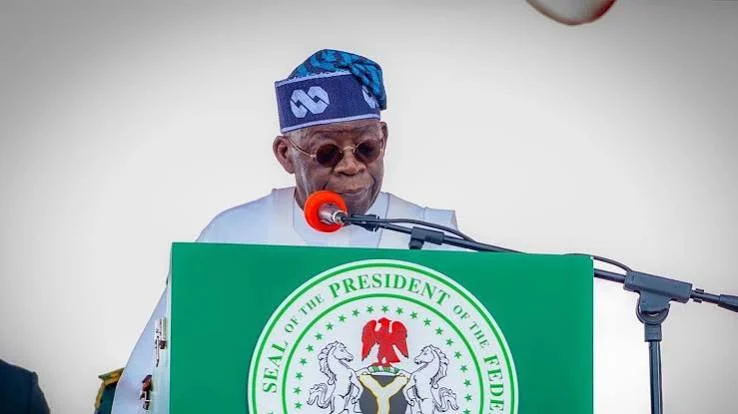
File: President Bola Tinubu.
The Minister of Information and National Orientation, Mohammed Idris, has said President Bola Tinubu inherited significant economic challenges, including fiscal pressures, declining revenues, exchange rate distortions and structural weaknesses that had constrained growth for many years.
Idris stated this on Friday in Umuahia during his opening remarks at a press briefing on the South-East Security Summit and the achievements of the Tinubu administration.
The South-East Regional Security Summit was organised by the Office of the Senior Special Assistant to the President on Community Engagement (South-East) in collaboration with the Federal Ministry of Defence and hosted by the Abia State Government.
Speaking on the economy, the minister said, “When President Tinubu assumed office, the administration inherited significant economic challenges, including fiscal pressures, declining revenues, exchange rate distortions and structural weaknesses that had constrained growth for many years.
“Under President Tinubu’s leadership, Nigeria is undergoing major reforms aimed at rebuilding the foundations of a stronger economy, improving infrastructure, expanding opportunities and strengthening national competitiveness.”
According to him, “the President made the difficult decision to implement reforms necessary to correct these challenges and place Nigeria on a path of sustainable economic recovery. The removal of fuel subsidy and reforms in the foreign exchange market were part of a broader effort to create a more transparent, productive and investment-friendly economy.”
Idris said the summit “was a significant platform that brought together key stakeholders from across the region, including government representatives, security agencies, traditional rulers, community leaders, political stakeholders, professionals, youth representatives and other critical voices committed to finding sustainable solutions to the security challenges confronting the South-East.”
He further said, “The Federal Government recognizes the enormous potential of the South-East and remains committed to creating the conditions necessary for businesses, industries and communities in the region to prosper.”
The minister said the government understood that reforms come with responsibilities, which was why it had continued to introduce interventions to support Nigerians, including programmes for small businesses, consumer credit initiatives, student financing and social protection measures.
According to him, the objective is to build an economy where Nigerians can produce more, businesses can expand and opportunities can multiply.
He noted that a peaceful South-East would attract investment, adding, “President Bola Ahmed Tinubu remains committed to building a Nigeria where every region can realise its potential and where every citizen can look forward to a future of greater opportunity.”
On the summit, Idris said, “the message from the Federal Government is clear: President Bola Ahmed Tinubu’s administration is committed to ensuring that every Nigerian, in every part of the country, has the right to live, work and pursue prosperity in a safe and secure environment.
“The security challenges facing the South-East, like other parts of Nigeria, require a comprehensive approach — one that combines effective law enforcement, intelligence-driven operations, community engagement, economic empowerment and development.”
He added that President Tinubu “has continued to strengthen Nigeria’s security architecture through enhanced support for security agencies, improved operational capacity, intelligence coordination and closer collaboration among federal, state and community stakeholders.”
“Importantly, the Federal Government recognizes that lasting security cannot be achieved through force alone. Peace and stability are strengthened when citizens have economic opportunities, young people have hope, businesses can thrive and communities have confidence in government.
“This is why the Renewed Hope Agenda places security within a broader framework of economic development, infrastructure renewal, human capital investment and social inclusion.
“The Summit also reinforces the administration’s commitment to listening to citizens, engaging communities and working with stakeholders across the country to develop solutions that reflect local realities. It also provided an opportunity to highlight the broader efforts of the Federal Government to reposition Nigeria for sustainable growth and development,” he said.
Sunday Nwakanma is a journalist at Punch Newspapers with over 25 years of professional experience in reporting. He is based in Abia State and has worked across local, regional, and national newspapers, covering a wide range of public affairs issues. Sunday’s work reflects extensive newsroom experience, multiple professional recognitions, and a strong commitment to press freedom and responsible journalism.
All rights reserved. This material, and other digital content on this website, may not be reproduced, published, broadcast, rewritten or redistributed in whole or in part without prior express written permission from PUNCH.
Contact: [email protected]