



AdvertisementChina stock marketBusinessBanking & Finance
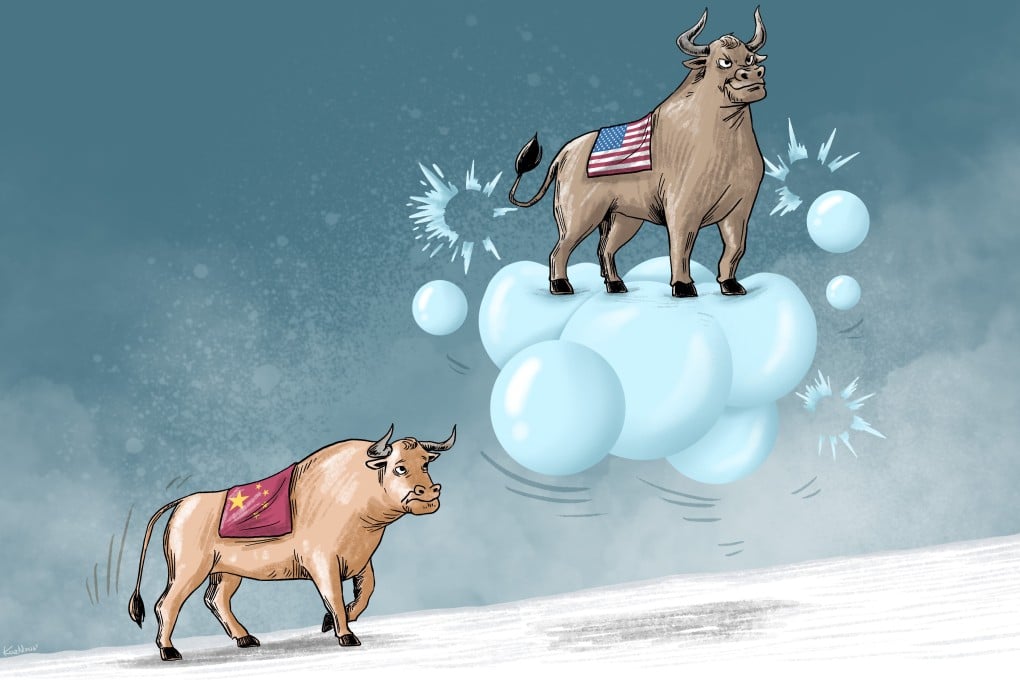
A tale of two markets: Wall Street cheers record highs while Beijing deflates bubbles
Analysts say China’s risk-averse financial policy is diverting capital to Wall Street, advising the building of ‘good bubbles’ to promote growth
7-MIN READ7-MIN Listen
Daisy WuPublished: 6:00am, 28 Jul 2026Updated: 6:04am, 28 Jul 2026
When the S&P 500, Nasdaq and Dow Jones Industrial Average hit record highs in early July, US President Donald Trump hailed it as evidence of America’s economic revival.
“This is WINNING. The Golden Age of America is beginning – and we are just getting started,” he wrote in a social media post on July 4, the 250th anniversary of the signing of the US Declaration of Independence.
Though it was only the latest in a long series of boasts about the stock market that have punctuated Trump’s presidency, it brought into relief just how differently Beijing talks about its own exchanges: rarely, and even then, carefully.
That doctrine of prudence is now facing an uncomfortable test. Chinese investors are increasingly keen to get their money into the S&P 500 rather than A shares at home, fuelling a surge in demand for Qualified Domestic Institutional Investor (QDII) funds, which allow approved institutions to invest overseas within regulator-set limits.
Washington’s success at using the boom to pull in global capital has left Beijing with an awkward choice: hold to its cautious script, or try to engineer a rival rally to keep money from leaving.
Xiao Geng, associate dean of the School of Public Policy at the Chinese University of Hong Kong, Shenzhen, said Chinese regulators needed a fundamental shift in how they thought about capital markets.
“We need to transition from pure risk prevention to the creation, accumulation, and preservation of wealth,” he said.
AdvertisementSelect VoiceSelect Speed00:0000:001.00x