


Another era of dollarised petrol pain
July 28, 2026 12:29 am

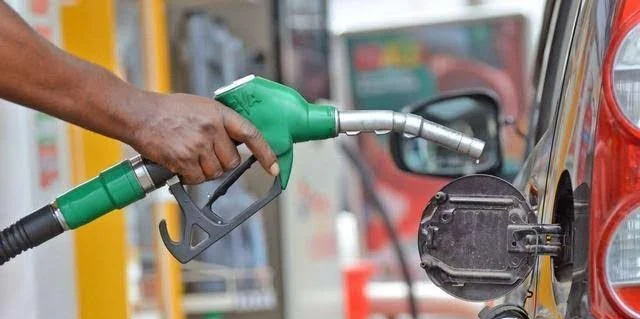
File Photo
NIGERIANS appear headed for another round of economic hardship. This follows the Dangote Refinery’s decision to abandon the naira in favour of the dollar when fixing its ex-depot fuel prices.
Nigeria’s foremost refiner had initially fixed the ex-depot price of petrol at $0.779 per litre, amid public demands for cheaper petroleum products following the easing of geopolitical tensions between the United States, Israel and Iran.
After widespread public outcry, the refinery reversed the decision to price petrol in dollars.
However, it simultaneously increased the pump price by N140 per litre. Petrol now sells for between N1,250 and N1,400 per litre, leaving consumers with little relief.
When the dollar-denominated pricing was first introduced in early July, diesel was listed at $1.087 per litre, kerosene at $0.942 per litre, while coastal deliveries of petrol were fixed at $1,044.62 per metric tonne.
The move immediately raised benchmark prices for diesel and aviation fuel following the transition to dollar-denominated transactions.
Dangote’s decision reportedly followed the suspension of the naira-for-crude scheme, which commenced on October 1, 2024. The company, however, clarified that the new pricing arrangement does not affect cooking gas.
The impact was swift. By last week, fuel queues had resurfaced in parts of Lagos and Ogun states. Petroleum marketers said they had suspended large-scale fuel loading while awaiting clarity on the refinery’s new pricing template and the landing cost of newly imported petroleum products.
Dangote Refinery explained that, since it procures crude feedstock from the Nigerian National Petroleum Company in dollars, it was only logical to sell refined petroleum products in the same currency. According to the company, adopting a uniform pricing framework eliminates the currency mismatch created by purchasing crude in dollars while selling refined products domestically in naira.
Although commercially understandable, the decision exposes the domestic petroleum market more directly to fluctuations in the international crude oil market and exchange rate volatility. The likely consequences include higher inflation, weaker purchasing power, rising transport fares, increased rents and fresh pressure on businesses and households already struggling to cope.
The development also raises important legal and policy questions. Section 20(5) of the Central Bank of Nigeria Act, 2007 makes it an offence to refuse the naira as legal tender for payment or to price and denominate goods and services in any other currency without prior approval from the Central Bank of Nigeria.
Although the Act recognises the naira as the sole legal tender for domestic transactions, it also provides regulatory exceptions for sectors such as oil and gas, maritime, aviation and designated Free Trade Zones, where foreign-currency transactions are permitted for specified operations.
This is precisely where government intervention becomes imperative.
The authorities must ensure that these regulatory exemptions do not inadvertently undermine economic stability or worsen the welfare of citizens.
While private investors deserve policies that allow their businesses to remain commercially viable, Nigerians equally deserve protection from avoidable economic shocks.
The debate over raising the national minimum wage from N70,000 to N100,000 remains unresolved, with organised labour already signalling its readiness to push aggressively for the increase. Any further escalation in fuel prices will inevitably intensify pressure for wage adjustments, erode workers’ real incomes, and deepen the country’s cost-of-living crisis.
Ironically, the Dangote Petroleum Refinery has been one of the brightest prospects for reducing Nigeria’s dependence on imported petroleum products and easing pressure on foreign exchange demand.
Yet the latest pricing policy risks producing the opposite outcome. Greater dollar demand within the downstream sector could worsen foreign exchange scarcity, weaken the naira and even encourage profit-taking by foreign portfolio investors, thereby increasing pressure on the country’s external reserves.
The government should therefore consider reallocating the 445,000 bpd of crude currently reserved for the four state-owned refineries to the Dangote Refinery. Despite spending more than N8 trillion on energy security expenses, according to a recent NNPC report, Nigeria has still failed to regain its previous crude oil production level of 2.2 mbpd.
The imperative of expanding domestic value addition in the oil and gas industry has never been more urgent. Equally important is the need to strengthen Nigeria’s Sovereign Wealth Fund, following the examples of oil-producing nations such as Norway and the United Arab Emirates, to provide a stronger fiscal buffer against global oil price volatility.
Nigeria must not squander the enormous promise of local crude refining. The economy cannot afford to relapse into heavy dependence on imported petroleum products, with the attendant depletion of foreign reserves and renewed vulnerability to external shocks.
Nor can it afford the creeping dollarisation of the downstream oil and gas sector. The Federal Government must intervene without delay by engaging local refiners and other stakeholders to develop a sustainable pricing framework that protects commercial viability while safeguarding the economy and shielding Nigerians from another cycle of fuel-induced hardship.
All rights reserved. This material, and other digital content on this website, may not be reproduced, published, broadcast, rewritten or redistributed in whole or in part without prior express written permission from PUNCH.
Contact: [email protected]