


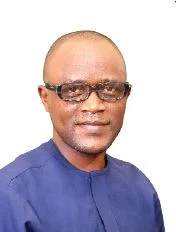
Creative industry needs better policies, tax incentives — Iyanda
July 26, 2026 12:00 am

By Dare Olawin
In this interview with DARE OLAWIN, QEDNG Creative Powerhouse Summit convener Olumide Iyanda discusses Nigeria’s creative industry, emerging opportunities for young talents, government support, the sector’s future, and the goals of the forthcoming summit aimed at driving growth and innovation.
Excerpts:
What inspired you to establish the Creative Powerhouse Summit?
I’ve been within the creative space for a while. In my journalism journey, I’ve covered mostly the creative sector. I was the entertainment correspondent while at The PUNCH. I handled the entertainment pages for a while. And I’ve been within that space actually. And having covered the cultural arts and creative sector, I saw the need for us to come up with a platform, a programme that discusses the entire spectrum of that sector. Not just music or film, but everything within that sector. And also, to stand at the intersection of creativity, business, policy and soft power. So that’s how I came to that. It’s my primary constituency, something that I’ve always had interest in. So that is it.
Having successfully held the inaugural edition, what are the key objectives of this second edition of the summit?
Last year, the theme was ‘Financing as a Catalyst for a Thriving Creative Economy’. So, last year we talked about raising money and stuff like that. And how financing is critical to that sector. While we were talking, during one of the conversations, somebody said something about the government coming up with ‘audio money’. He said some of the things, some of the programmes that the government said they’ve come up with, are not particularly seen or felt. So, this year we said, okay, we want to look at that sector as a key part of Nigeria’s broader conversation about Nigeria’s future. So that we are just not talking about it in isolation. We want to look at the role, what it does, both for now and the important role it plays in Nigeria’s future. Most of the time we talk about figures, that the creative sector contributes so much to the GDP. We said the government is planning to raise the creative economy, which is worth so-so amounts, by 2030. But really, do we really see that as part of this country’s future? Beyond just creating institutions at individual levels, what are we doing at the institutional level, both at the level of government and in private institutions? And also, what have people done on their own to create what we now have as this creative economy? What have the challenges been? What have been the success stories so far? So, this year, we are bringing people together from a broad spectrum of that economy. We are looking at bringing younger people on board. So, we are going to have people from across different generations. The old people, the young ones, those who are creating for now and those who are creating for the future. So, the summit this year, to put it in one sentence, is actually to project what we have now and see the role it plays in the future. And also, to look beyond what we are doing. What is the government doing? Is the government doing anything at all? And how can we make it better? And now we can trust the institutions that we have.
What strategies will you adopt to effectively explore this year’s theme, ‘Creativity, Culture and Nigeria’s Next Chapter’?
We are going to do justice to it. Our keynote speaker is Mr Ife Adebayo. He is the National Coordinator of the Investment in Digital and Creative Economy Programme of the Bank of Industry. That programme is actually designed to provide international support for young creatives between 18 and 35. Remember I said something about somebody talking about ‘audio money’ the other time. So, Mr Adebayo is coming to talk to us about building structures and building institutions that support and provide the necessary additional framework for that industry. Our chairman saw Demola Aladekomo, one of the pioneers in the tech space. We recognise that technology is the backbone right now upon which the industry stands. So, we have a keynote speaker, we have a chairman, and we have panellists across sectors who are versatile, who are known, and who have made success in their various fields. We have Joke Silva, one of the biggest actresses that ever came out of Africa. We have Steve Babaeko, an expert in advertising, branding, and the creative industry. We have Audu Maikori, the co-founder and chairman of Chocolate City Group that has nurtured and discovered some of the biggest talents in Nigeria. We have Yibo Koko, who is the Director-General of the Rivers State Tourism Development Agency. We have Omotayo Enokuju, who is the Head of Legal at Ebony Life Group. We have Anwuli Ojogwu, who is a publisher. She owns a firm that publishes well-known writers, one of whom is Chimamanda Adichie. So, these are heavyweights in their own right. We have Fisayo Fosudo, one of the biggest finance and technology creators in Nigeria. We have Efe Omorogbe, who, of course, is also big in the music and movie space. So, these people will come together and do justice to the theme this year. Apart from us also having participants from the industry. So, I’m confident that the conversations that we are going to have on that day will provide a framework for positioning Nigeria’s creative economy both now and for the future.
Who is the primary target audience for this programme?
Everybody within the creative space, from young to old. Whatever it is that you are doing, you will find someone and something that is of interest to you. And for us, the key pillars of the creative industry, there are many. You have film, you have movies, you have publishing, you have fashion, you have content creation and so on. So, everybody within that space is invited. Like I said, even if you are a young talent, even if you are looking at coming into that industry, you will find someone or something who is going to inspire you on that day. And even if you are a financier, you want to finance, and you want to sponsor people; you can also make it there. Last year, we had people from First Bank and Providus Bank on our panel.
How would you assess Nigeria’s creative industry today, especially considering how digital platforms have helped curb the piracy that once plagued the sector?
The industry is actually massive. It’s growing. And it’s perhaps one of the biggest that Nigeria has. It’s growing. It has potential to do more. It’s one of the biggest employers of labour in the country. And it’s a place that provides employment, provides jobs and also energises the economy. So, it’s growing. It has potential. It’s always been like that. And you spoke about piracy. The menace of piracy is still there in spite of the institutions that have been built by technology. People still complain. People still download people’s music, films for free. People still steal other people’s contents. People still share people’s content without attribution, without approval. So those things are still there. The challenge, like one of my friends would say, is the same poison in different bottles. Those are some of the things that we also want to address and see what kind of internal supports are available. Now, let me tell you something: a lot of people come into this industry not knowing that there are institutions that support this industry. A lot of people want to go, but they want to go alone. They don’t know about collaboration. The government and some institutions actually provide support for those that people don’t even know about, or people don’t have access to. So, it’s growing. It’s big. It’s massive. This is an industry that has produced names like Fela in the past, that have produced names like King Sunny Ade, Olu Jacobs, Pete Edochie, Burnaboy, Wizkid, Davido, Ayra Star, Funke Akindele, Toyin Abraham, and so on. It’s massive. So, it’s not an informal industry. It’s not an industry that we should play with. Unfortunately, most times, some of our people don’t get the recognition they do now until they go outside. But again, if they were not created in Nigeria in the first place, they won’t get global recognition. So, there’s so much that this industry has given the country and it will give the country.
Many believe the government has not done enough to support the creative sector. What advice would you offer policymakers to strengthen the industry?
Well, I won’t always say that the government is not doing enough. The government is doing as much as it can within its own limitations: limitations by itself and by the decision that it has. I think what the government can do is actually to listen to people within the industry more and also to realise the potential in this industry and not just to only talk about it when they want to campaign, which is also one of the reasons we are not pushing that part of this conversation. But this summit also has an eye on the election that is coming next year. Most of the times when people talk, nobody asks politicians about their manifestos for the creative economy. People just talk broadly, I will provide jobs, I will do this thing. But I say that a sector that employs as many people as we do, the government needs to pay more attention to it. The government needs to actually put the right people in the right places. We need legislations that make it easy for the economy, for that sector to thrive. We need policies that protect that industry to operate within that industry. We need incentives, even in terms of taxes. You do not see somebody who is doing so well and the first thing that you are thinking of is how to tax the person out of existence. You have to look at all of those things. But to do that, you have to find people who understand the industry.
Could you tell us more about the conference?
The conference is on 11 August, at Radisson Blu Hotel in Ikeja. We are starting at 10. You will enjoy yourself when you come. There are some things that we are wrapping up with. We will still make some announcements as we go along the way. But whatever generation you belong to, I promise you, you’ll find something that will resonate with you there. And wherever you are, whatever level you are in the creative industry, you will find something.
Dare Olawin is a journalist at Punch Newspapers with over a decade of reporting experience. He began his career as a community reporter and now covers the energy sector, including oil, gas, electricity, and renewables. Dare’s work reflects hands-on newsroom experience, professional development through workshops and conferences, and a strong commitment to accurate and insightful journalism.
All rights reserved. This material, and other digital content on this website, may not be reproduced, published, broadcast, rewritten or redistributed in whole or in part without prior express written permission from PUNCH.
Contact: [email protected]