


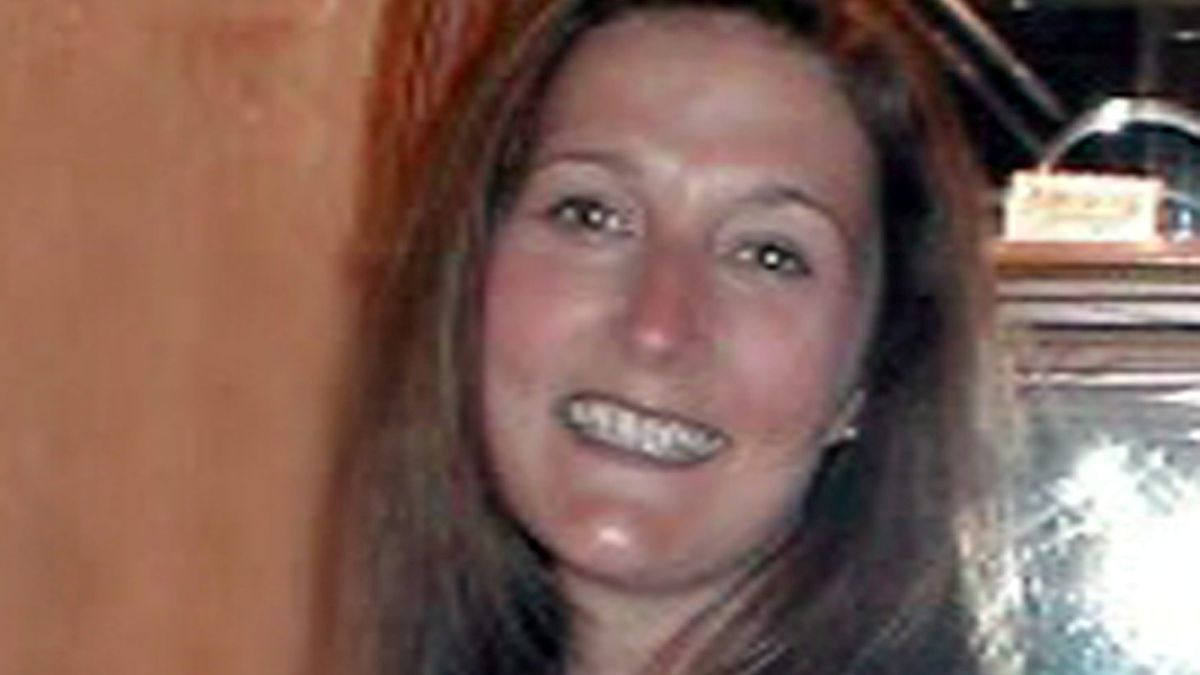
It is a murder where the victim’s body has never been found but a case that has since inspired a major change in the law. Thirty eight year old year old office worker Suzanne Pilley disappeared in May 14, 2010.
She had been reported missing to police by her family after she failed to turn up for work that day. Their first task was to check all available CCTV in an attempt to pin down her last movements from her home in the Stenhouse area of Edinburgh to her city-centre workplace.
Shortly before 9am security cameras showed her getting off the bus at Jenners department store, in Princes Street, then popping into the Sainsbury’s on St Andrew Square. She then walked across George Street before disappearing into nearby Thistle Street.
There she walked into workplace Infrastructure Managers Ltd where she was employed as a bookkeeper.
But there was no sign of Suzanne after that.
The street CCTV showed her arriving – but not leaving.
 View 7 Images
(Image: PA)
An early ‘person of interest’ was David Gilroy a 49 year old married work colleague and former Royal Navy engineer, with whom Suzanne had had a relationship.
But that had ended and he had gone back to his wife and family.
In the weeks before her disappearance Gilroy had sent Suzanne more than 400 texts – including 64 in one day – but they suddenly stopped after she went missing.
 View 7 Images
(Image: PA)
The day after her disappearance Gilroy made what was an unplanned trip to a school in Lochgilphead, Argyllshire where his company had a maintenance contract.
During the return journey he received a call from detectives investigating her disappearance and arranged to meet with them later that day.
One officer spotted scratches on Gilroy’s hand and when he came in to have them photographed the next day, he had covered the cuts with make-up.
From that moment, he was a prime suspect in Suzanne’s disappearance.
A forensic examination of Gilroy’s silver Vauxhall Vectra found the suspension, sump, springs and wheels had been badly damaged by travelling over rough ground. Vegetation and foliage trapped underneath in the wheel arches suggested that he had visited a forest. Gilroy was unable to offer any explanation.
In the absence of any eye witnesses or forensic evidence police relied on mobile phone masts and CCTV to pin down his final movements.
He was caught on camera at the famous Green Welly Stop Shop and filling station at Tyndrum, Argyllshire around 1:20pm on the day after Suzanne went missing. He passed a second camera on Inveraray Main Street shortly before 4pm.
It meant a journey that should have taken him 35 minutes had lasted a lot longer. After stopping to collect a bundle of bin bags from the school at Lochgilphead, he headed home, with the journey also taking longer than necessary.
Gilroy is believed to have buried Suzanne that afternoon in the 400 square mile wilderness of the Argyll Forest, stretching from Tyndrum to Inveraray.
 View 7 Images
(Image: Daily Record)
He was charged with her murder in June, 2010 and stood trial at the High Court in Edinburgh in February, 2012.
The jury were told that Gilroy had met Suzanne as she came into work and lured to the offices’ basement garage where he killed her.
He hid her body in an alcove and returned home to collect his Vauxhall Vectra, buying air fresheners on the way.
Gilroy was then said to have driven home with Suzanne in his car before attending a school play and going for dinner with his family.
The jury were shown grainy CCTV images, captured inside a city centre restaurant on the night Suzanne disappeared having a meak with his wife and two children.
That night, Suzanne’s body is believed to have been left in the boot of the Vauxhall Vectra on the driveway of the family home.
 View 7 Images
(Image: Crown Office Communications)
The prosecution alleged that Gilroy had used the extra time spent in Argyllshire to find a place to dump Suzanne’s body.
That was also explained by the damage to the car and vegetation and foliage trapped on the underside. Springer Spaniels trained to smell for blood and human remains searched the offices where Gilroy and Suzanne worked.
They identified three areas of interest; one in the basement, and two in the boot of Gilroy’s Vauxhall. His last telephone contact with Suzanne was on May 3 – the day before she went missing – when he left 15 text messages and one voicemail. But nothing after that.
Gilroy was found guilty at the High Court in Edinburgh in April 2012 by a majority verdict after almost three days of deliberation by the jury.
He was given a life sentence and and ordered to serve 18 years before he could be considered for parole. Trial judge Lord Bracadale told him:”It seems you are the only person who knows where her body is.
‘I hope a day will come when you will feel able to disclose that information and that might bring some comfort to her bereft family.'”
 View 7 Images
(Image: SWNS.com)
Over the years Gilroy has protested his innocence. In December 2012, an appeal against his conviction was rejected by the Court of Criminal Appeal in Edinburgh.
A subsequent appeal to the Supreme Court in London, was also thrown out. In 2017, The Scottish Criminal Cases Review Commission, rejected an application by Gilroy.
Sylvia’s father Robert died in February, 2019, at the age of 77 without ever seeing his daughter laid to rest. She is survived by her mother Sylvia and sister Gail.
Despite a massive police effort and repeated searches over the years, Suzanne’s body has never been found. The main focus of the search has been at Glen Croe, Argyll, near the popular Rest and Be Thankful beauty spot on the A83.
Gilroy is now is one of only a handful of killers to be successfully prosecuted without a body having been found.
In March this year ‘Suzanne’s Law‘ came into force after years of campaigning by her family and that of another missing murder victim Arlene Fraser.
It means parole boards now have to take into account a failure of a killer to disclose where a victims body has been buried when considering that person for release. The man who led the hunt for Suzanne’s killer former Detective Chief Supt Gary Flannigan has welcomed the new legislation.
He is among many who feel that the legislation does not go far enough and it should be an absolute condition of parole that the killer discloses the location of his victim’s body. Mr Flannigan said:”I recognise the important step forward represented by Suzanne’s Law,
“I struggle to see how it can be regarded as a proportionate response to the profound and enduring suffering inflicted on the families of victims. I continue to hope that, for Silvia, Gail and the other family members, Suzanne can one day be found.”
 View 7 Images
(Image: Daily Record)
A Police Scotland spokesperson said: “We are committed to finding Suzanne and bringing her home to her family. Any new information we receive will be assessed and acted on appropriately. We’d urge anyone who may be able to help to contact Police Scotland on 101.”