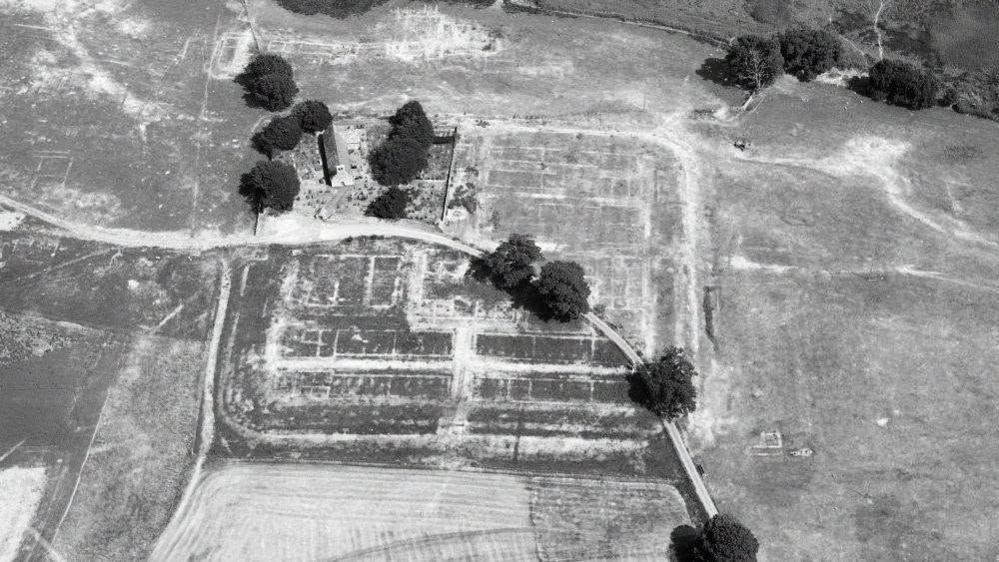
 Image source, RCAHMW
New details have been collected of buried Roman buildings at Caerhun Roman fort in Conwy
ByAngharad ThomasBBC Wales
Lost archaeological sites have emerged in grasslands across Wales after a prolonged spell of hot and dry weather.
Wales has seen about 5% of the average rainfall for July, after a series of back-to-back heatwaves and a drier than usual April to June. A drought has also been triggered in parts of Wales.
Experts said these dry conditions have brought to light a range of hidden archaeological remains, including Roman buildings and practice trenches from World War One.
Many are only visible from the air as distinctive marks in crops and grass, with some not being seen for “two or three decades”, according to the Royal Commission on the Ancient and Historical Monuments of Wales (RCAHMW).
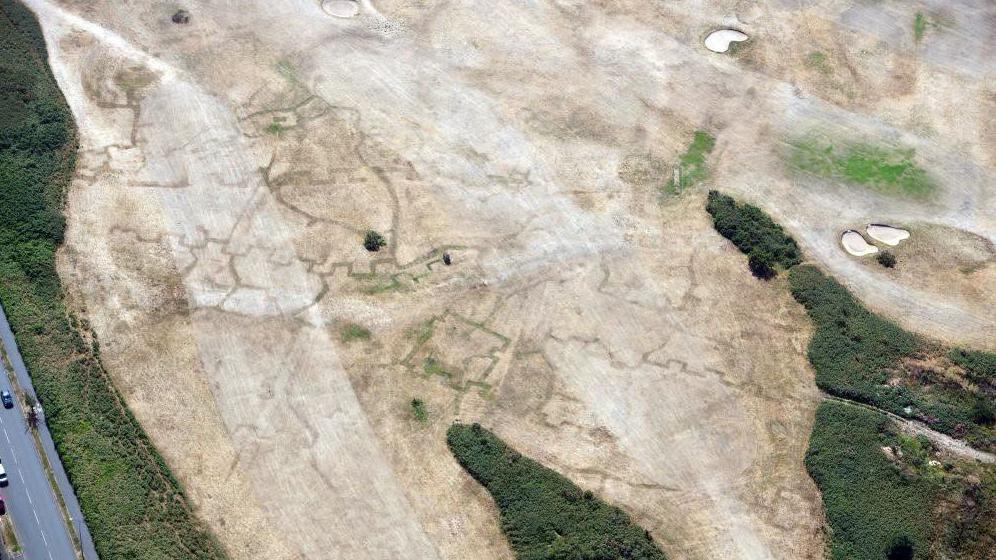 Image source, RCAHMW
Parchmarks of World War One practice trenches are seen beneath a golf course in Deganwy, Conwy
The crop marks are made by vegetation drawing on better nutrients and water supplies trapped in long-gone fortification ditches – leading to green growth that stands out.
But they can disappear as quickly as they emerge once the weather conditions change.
Archaeologist Dr Toby Driver has been racing against the heat to record and study the monuments.
He said they would normally have to wait every five to seven years for “a record heatwave summer for aerial archaeology”, but now they come “every year”.
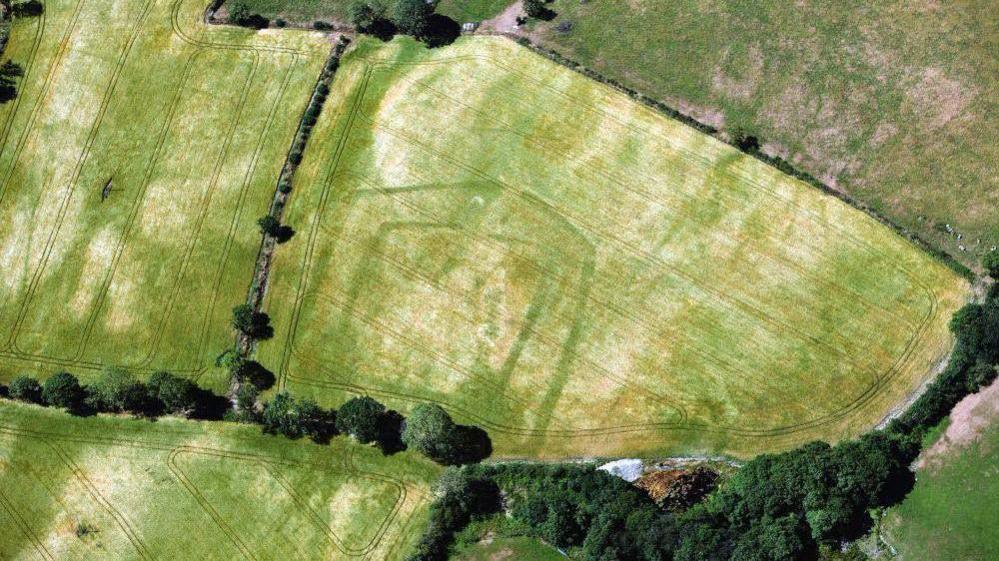 Image source, RCAHMW
A previously unrecorded Iron Age or Romano-British double-ditched farmstead was revealed in ripening cropmarks near Llandysul, Ceredigion
RCAHMW said the east and north-east of Wales has been very dry since mid-May, while much of west and south Wales stayed fairly damp and green.
However, the series of heatwaves in late June scorched off grasslands across Wales.
It revealed “monuments ranging from prehistoric long barrows and forts to Roman buildings and even First World War practice trenches,” they said.
The national archive for the Welsh historic environment has released photographs of Driver’s discoveries following flights from Haverfordwest and Caernarfon airport in June and July.
“This year has been pretty windy across Wales, so some of the longer trips to record cropmarks have made for challenging flying,” Driver said.
“Sometimes the cropmarks are so clear they jump out as we orbit the aircraft around to photograph them. But some parts of Wales are now so dry that the cropmarks can be faint and pretty hard to see.”
He added: “In these cases we digitally rebalance the colour bands of the image, really making the archaeology ‘pop’ and reveal previously hidden details – these images appear as black and white”.
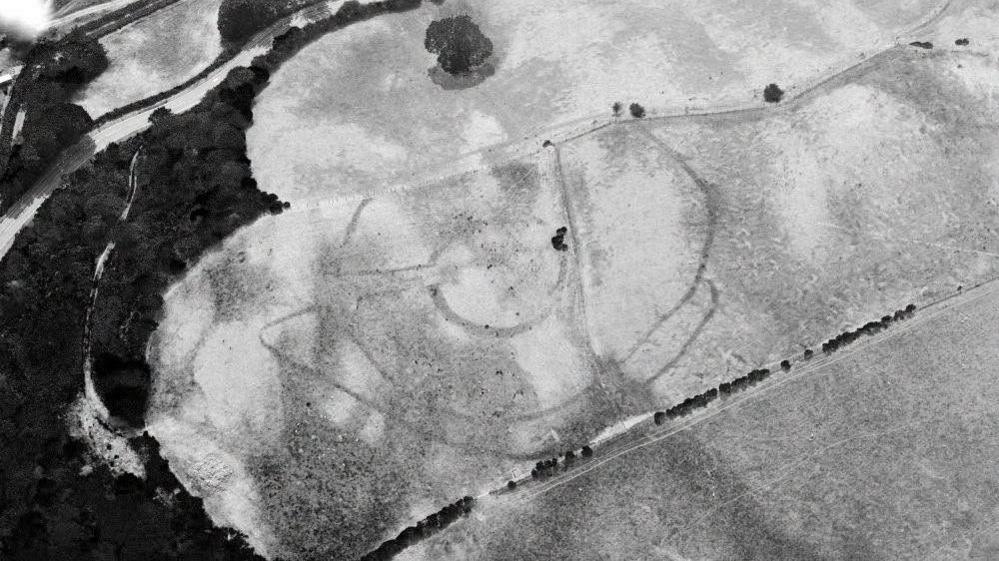 Image source, RCAHMW
What is considered to potentially be a corral for cattle from the Iron Age 2,000 years ago in dry pasture near Lampeter, Ceredigion
In Welshpool, Powys, cropmarks of a rectangular Neolithic long barrow has been seen that dates back around 5,000 years, while in Conwy new details have been collected of buried Roman buildings at Caerhun Roman fort.
Dramatic parchmarks of First World War practice trenches beneath a golf course were also seen at Deganwy, Conwy, while a previously unrecorded Iron Age or Romano-British double-ditched farmstead was revealed in ripening cropmarks near Llandysul, south Ceredigion.